
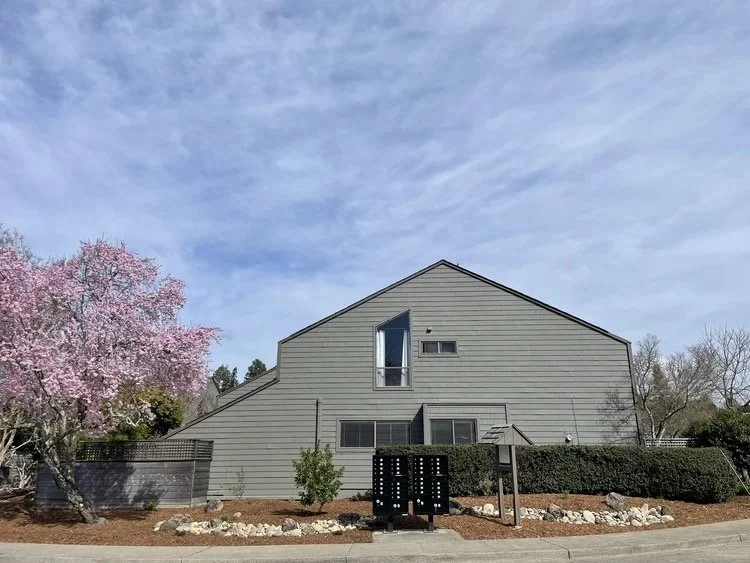
Community Garden in Sebastopol
Location: Sebastopol, CA
Property Type: HOA with 28 residences
Design Goals:
Synthesize shared space across 28 residences into a cohesive feel
Remove 8,000+ sq ft of thirsty lawn and replant to attract wildlife
Celebrate local native plants in naturalistic plantings that add cohesion and harmony throughout the condo community
Add color, texture, and habitat into the communal spaces with drought tolerant plants and fieldstone boulders
Cluster plantings into bouquets for maximum visual impact and firescaping benefits
Reuse on site soil and removed lawn to create planting mounds. Reduce waste!
Add seasonal dry creeks to slow and sink stormwater and recharge groundwater.

Project Ecological Benefits:
Native + pollinator plants support native bats, birds, hummingbirds, bees, caterpillars, moths, and butterflies
Mulch improves soil health, reduces water loss, regulates temperatures Dry creeks provide habitat crevices for lizards + bugs
Significant reduction in supplemental water usage from previous lawn
Mounded plantings reused removed lawn to build planting islands
In March 2025, 28 home owners came together to steward their communal land into something more than 8,000 sq ft of thirsty lawn. They invested in native and drought tolerant plants for biodiversity, long bloom periods, dry creek beds to sequester water, and a shared vision of thriving natural spaces just steps from their homes. This community approach to land stewardship is deeply rooted in Sebastopol and throughout Sonoma County.
Green Valley Vista HOA partnered with Wild Earth Art to remove thousands of square feet of irrigated lawn in the common front yard areas within their HOA community. The removed lawn was flipped and used to create mounds and undulating planting beds filled with local native plants. To save on the budget funded by the HOA, plants are clustered together in bouquets to maximize layering of colors and textures. This same technique is a tenant of firescaping as it keeps possible fuel sources separate to slow the spread of wildfire.
Rather than removing tons of existing plants for a clean slate, the community opted to supplement with many California native plants to fill in over time around mature shrubs and trees on site. This keeps mature plantings for bird habitat and structure while young plants establish.
Springtime brings the bright yellow blooms of Achillea ‘Moonshine’ and Phlomis fruiticosa alongside pinks of Correa pulchera and Salvia spathacea and purples of Ceanothus ‘Anchor Bay.’ By peak summer Eriogonum and Epilobium are in bloom just as the Mimulus are beginning to fade. Fall welcomes Romneya coulteri (still small and establishing) and seed heads on Festuca californica and Calamagrostis foliosa ‘Little Nootka.’ Upon winter arrival birds are thankful for the layered blooming of four Arctostaphylos varieties: ‘Louis Edmunds’ and ‘Howard McMinn’ as upright shrubs with ‘Pacific Mist’ and ‘Emerald Carpet’ blanketing the understory.
This garden invites native bats, birds, hummingbirds, bees, caterpillars, moths, and butterflies. Over time the arbor mulch will break down to feed the soil– in the meantime it regulates temperatures, reduces water loss via evaporation, and suppresses weeds in the seed bank.
The communal gardens are maintained following Integrated Pest Management practices and water-wise drip irrigation. Individual home owners also have personal gardens to express themselves through beautiful stonework, fountains, seating areas, and container gardens.
The garden’s proximity to the Atascadero Creek was considered in the design and install process as well as how the gardens are maintained.
Featured Plants:
California native evergreens including Eriogonum fasciculatum (CA buckwheat), Mimulus aurantiacus (Sticky Monkey Flower) and four varieties of Arctostaphylos (Manzanita).
Pollinators love Epilobium canum (CA Fuchsia) and Achillea ‘Sonoma Coast’ for long lasting blooms through the summer heat.
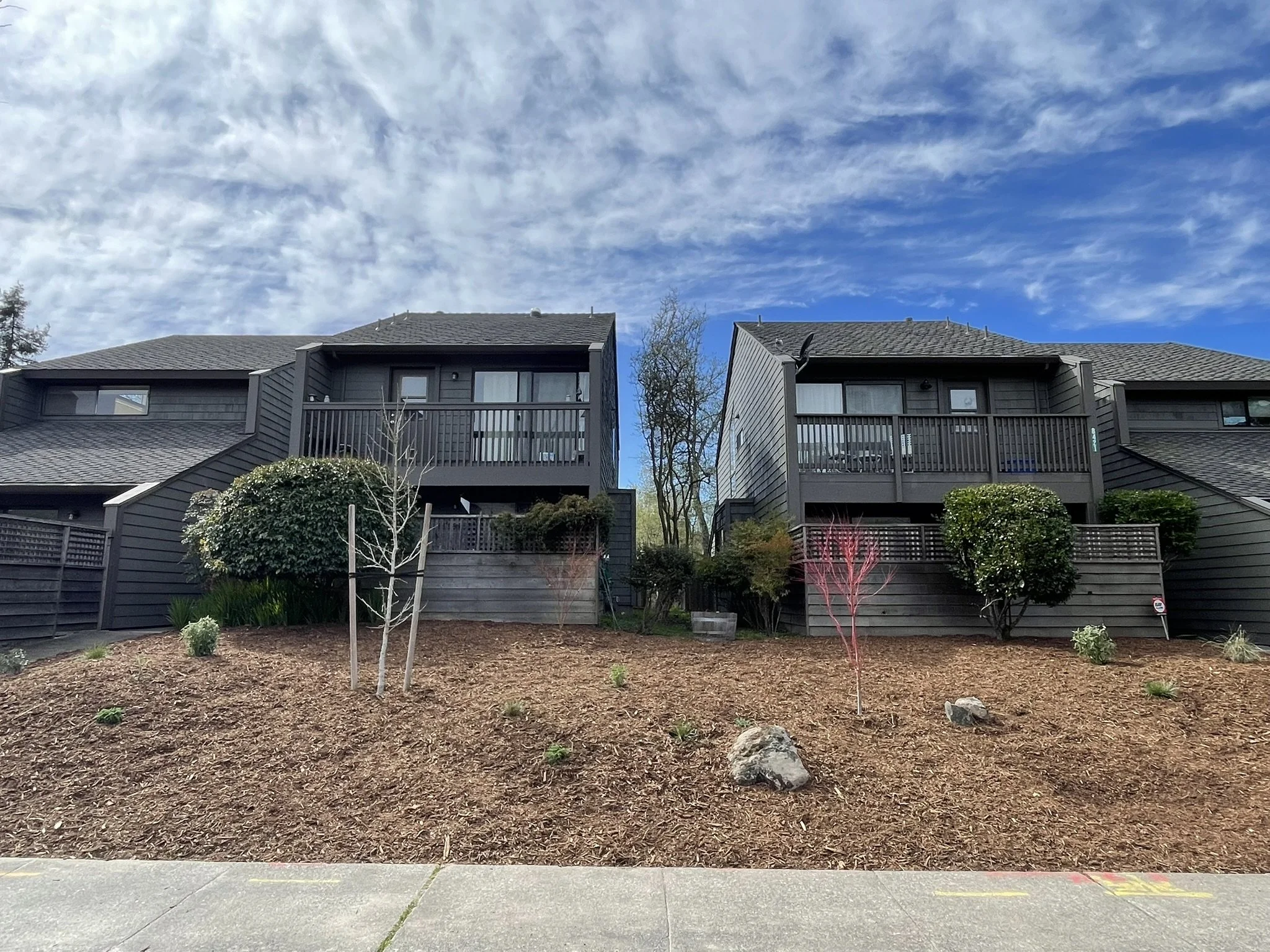
Freshly planted perennials under existing Ginkgo and Japanese Maples
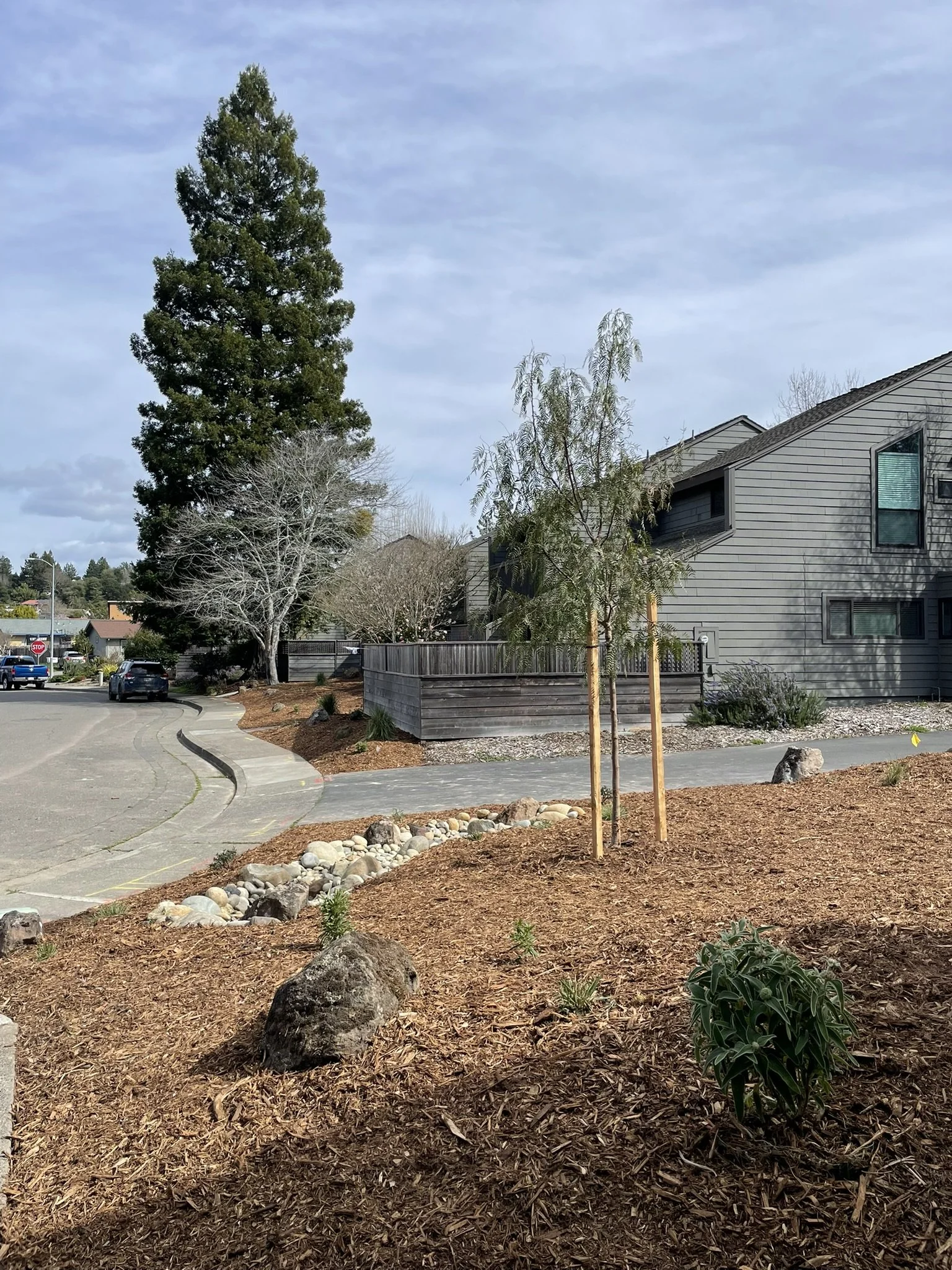
New Schinus molle (CA Pepper Tree) planted uphill of a dry stream bed to catch stormwater
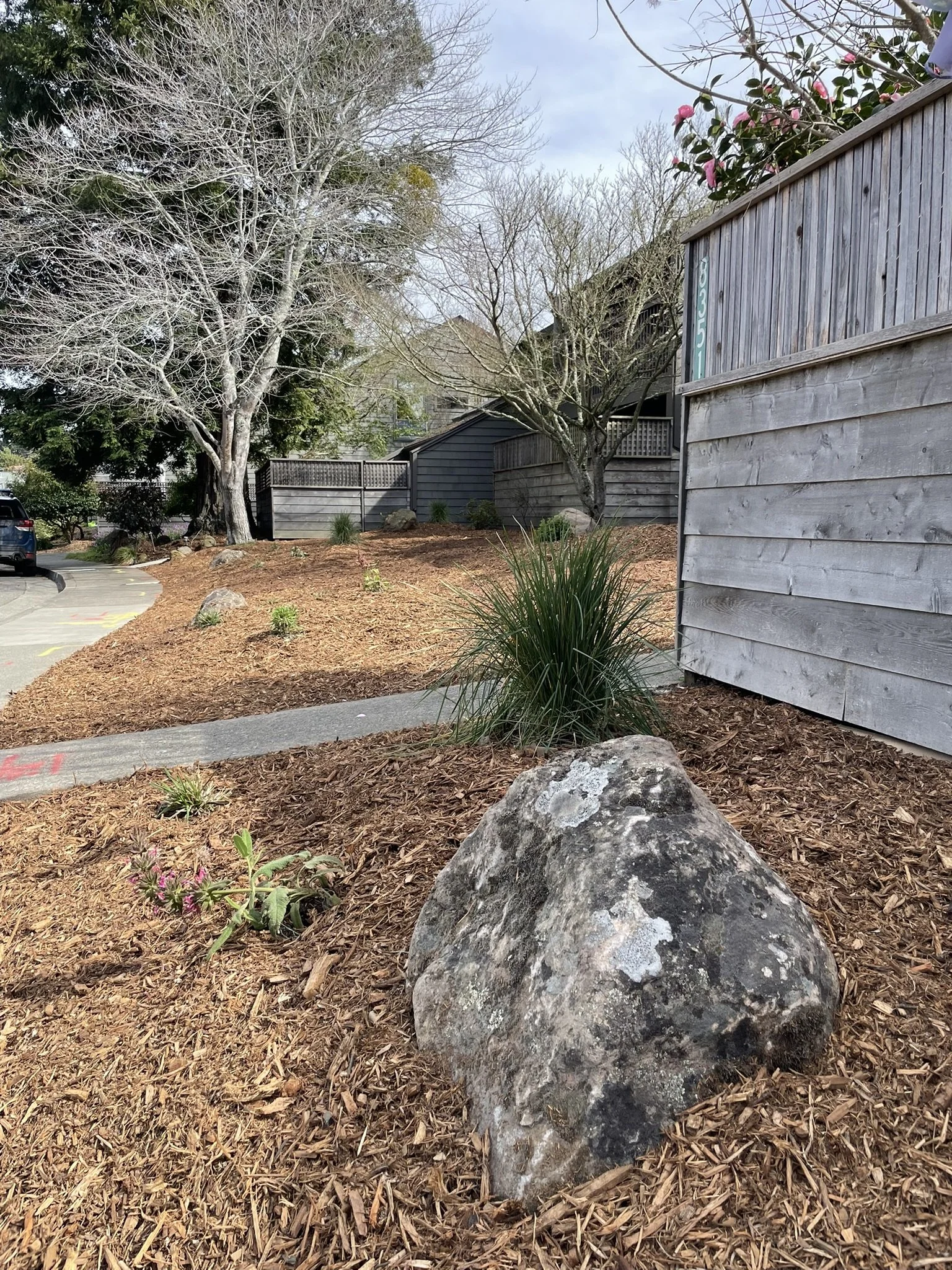
Local moss rock boulder anchors this corner planting
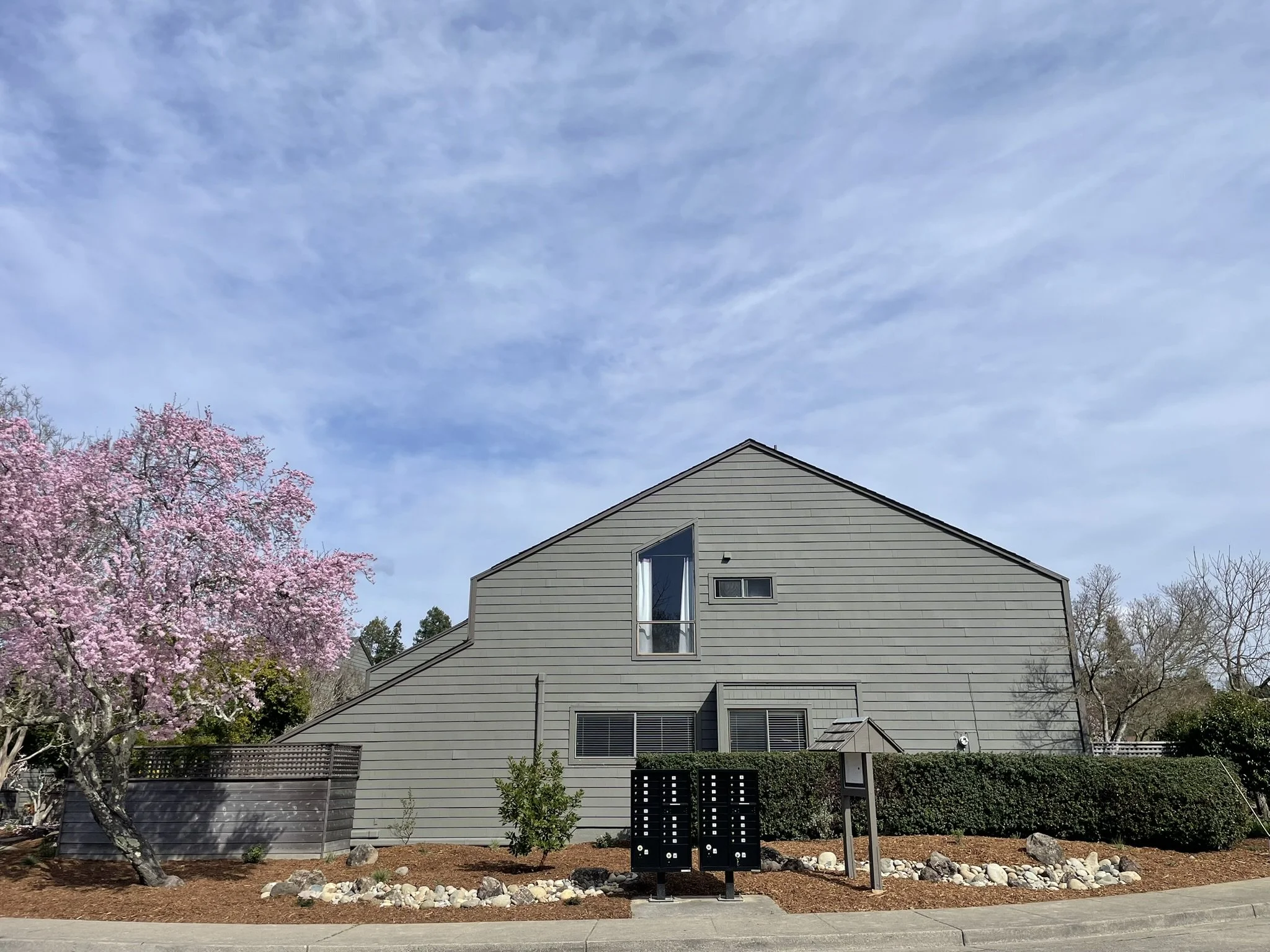
Blue skies and pink blossoms
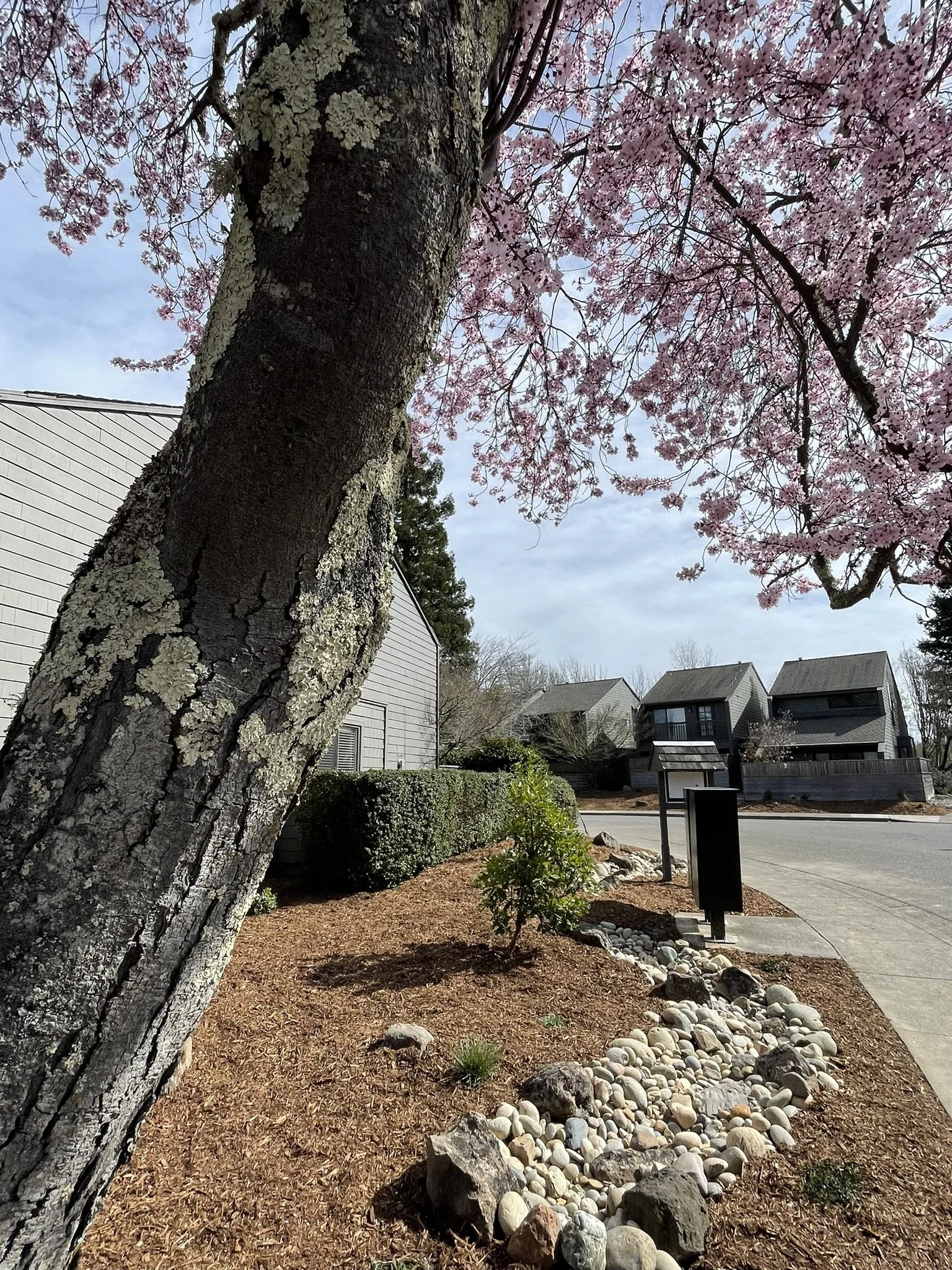
View of the dry creek bed through the branches of an established plum tree
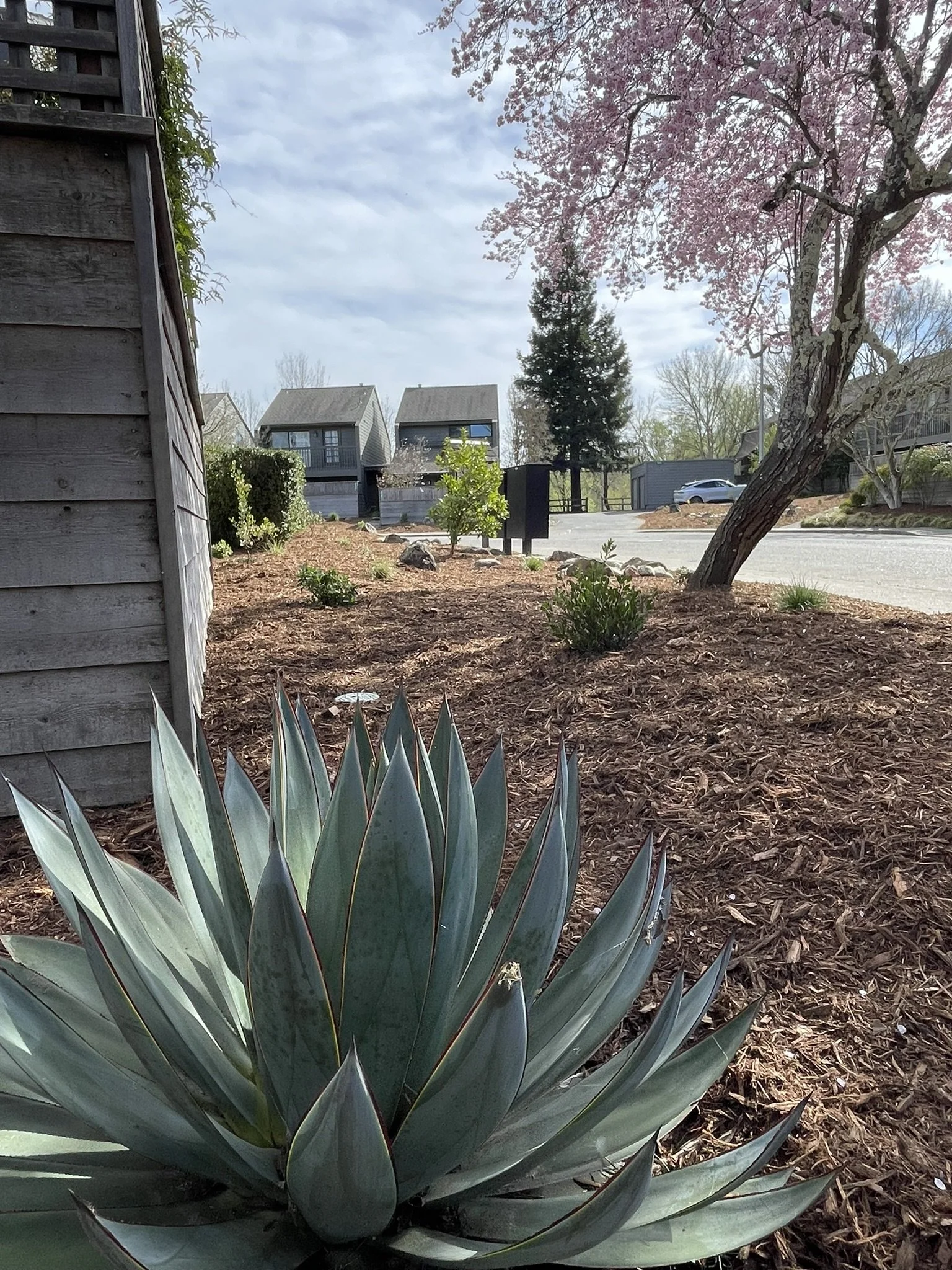
Agave peaking around the corner
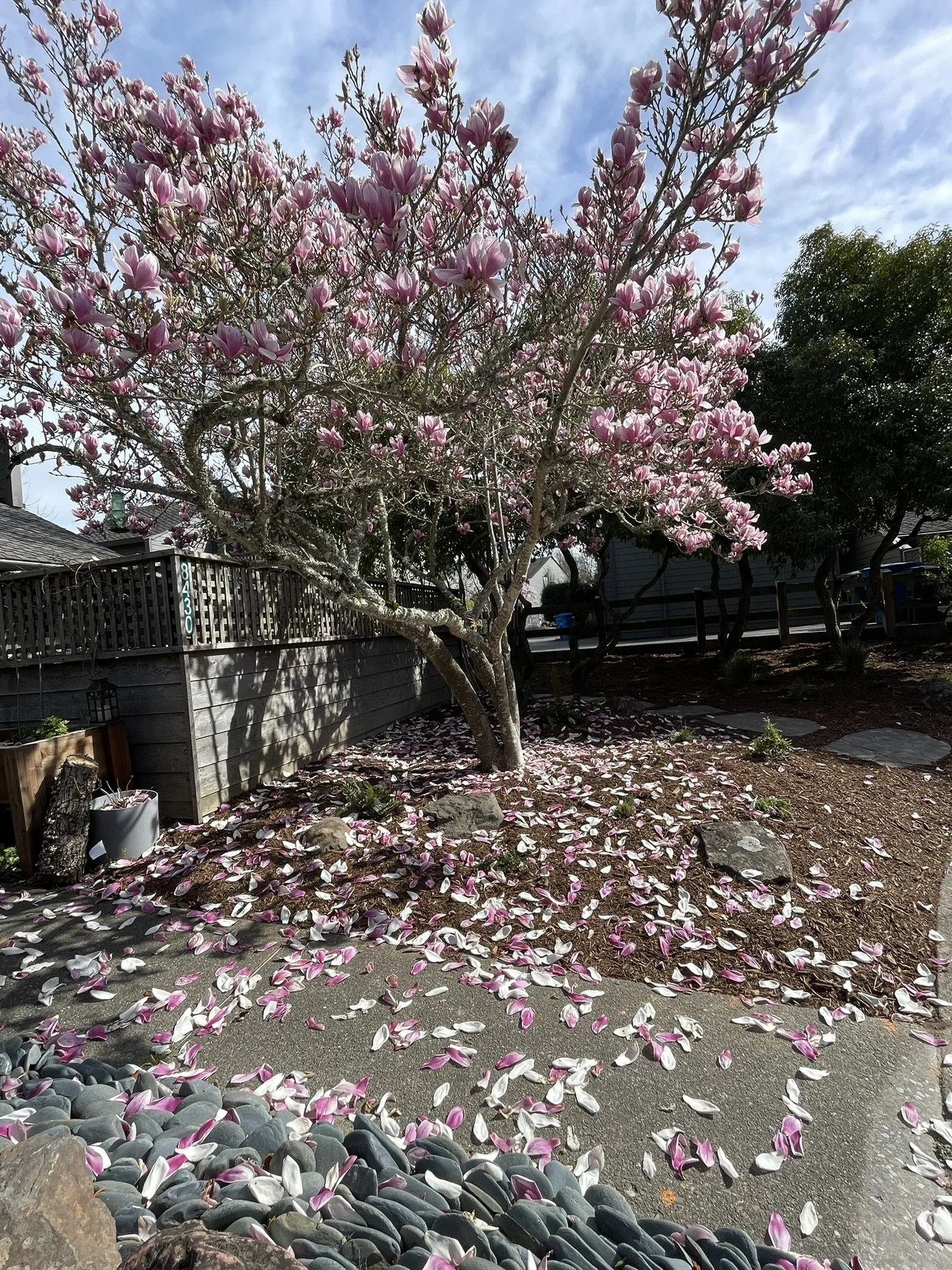
Magnolia blossoms bursting like confetti
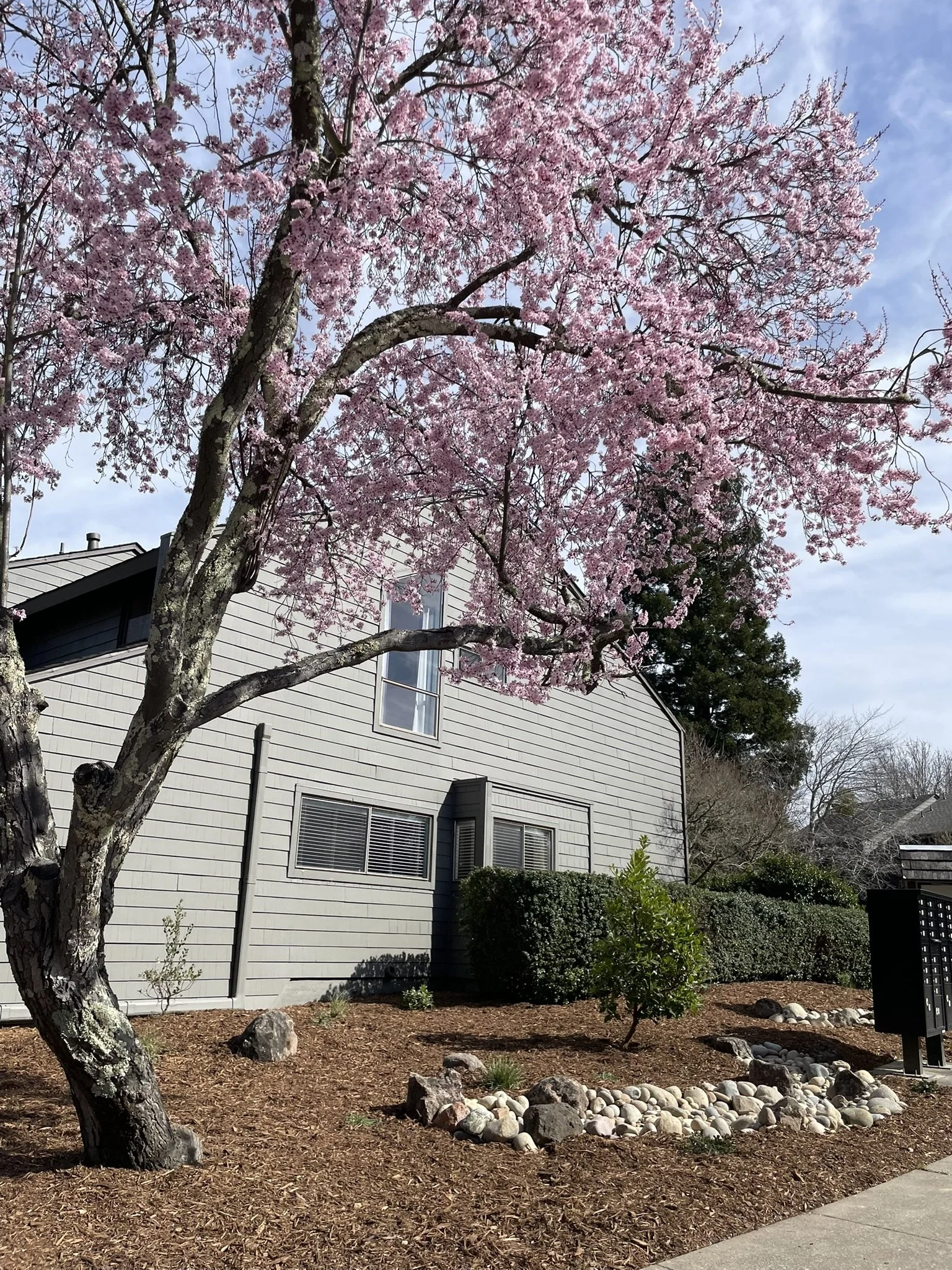
Mature canopy over freshly planted understory
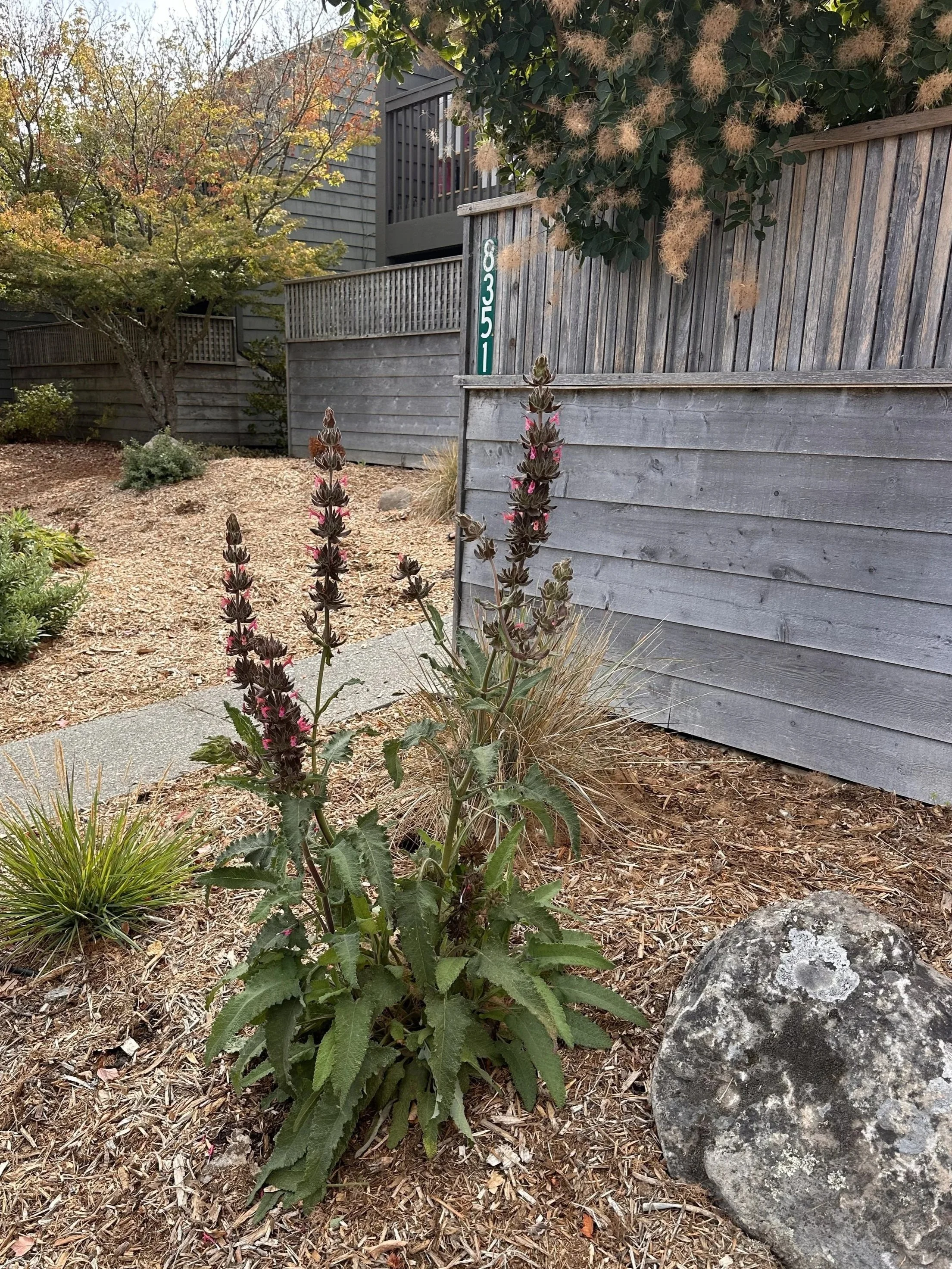
Salvia spathacea (CA Native hummingbird sage) growing tall in it's first summer planted
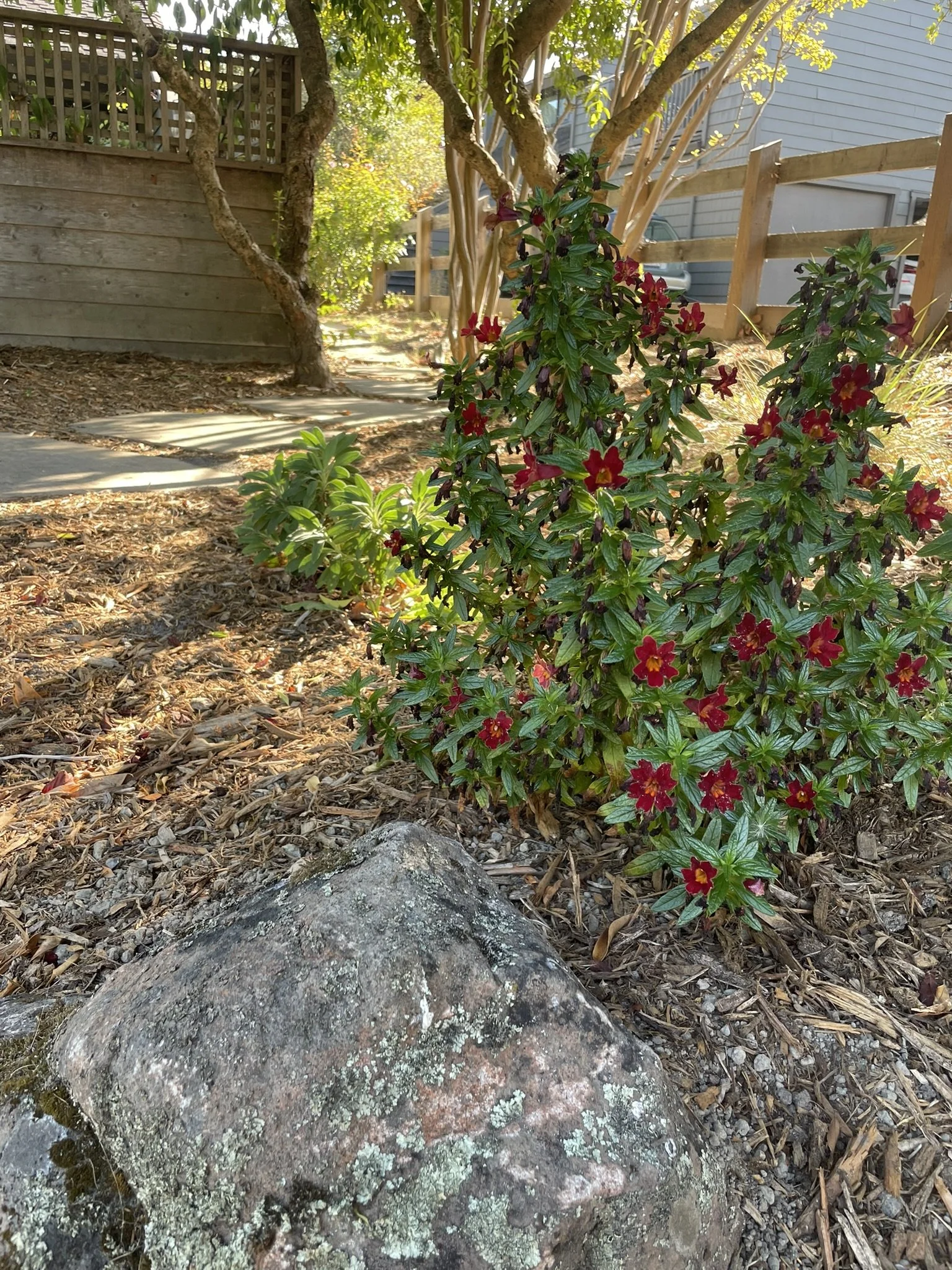
Mimulus (Sticky Monkey Flower) blooms in dappled sunlight in it's first summer
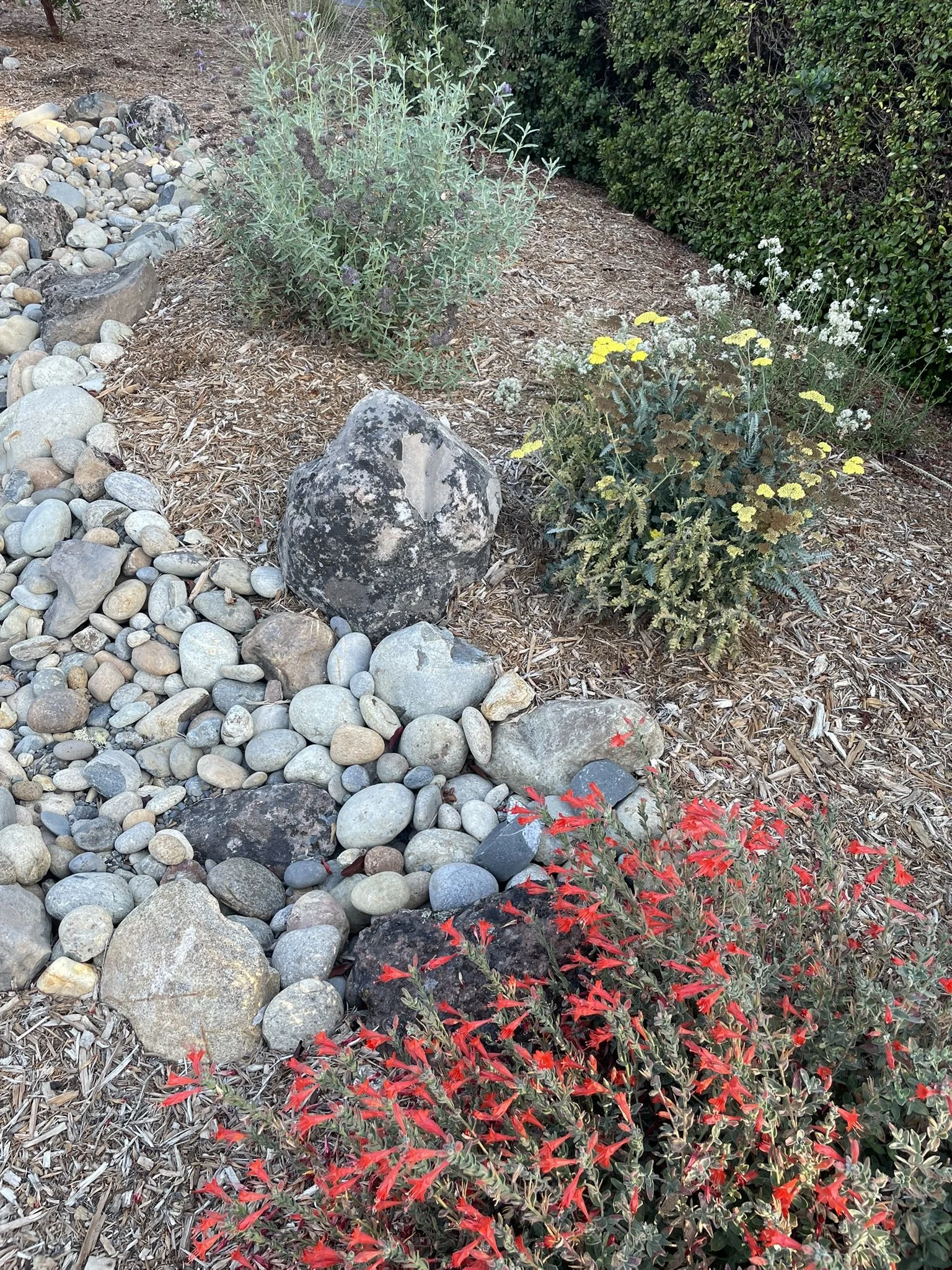
Late summertime look at California native Fuchsia (red), Achillea (yellow), and Salvia (purple) planted on the berms of a dry creek bed
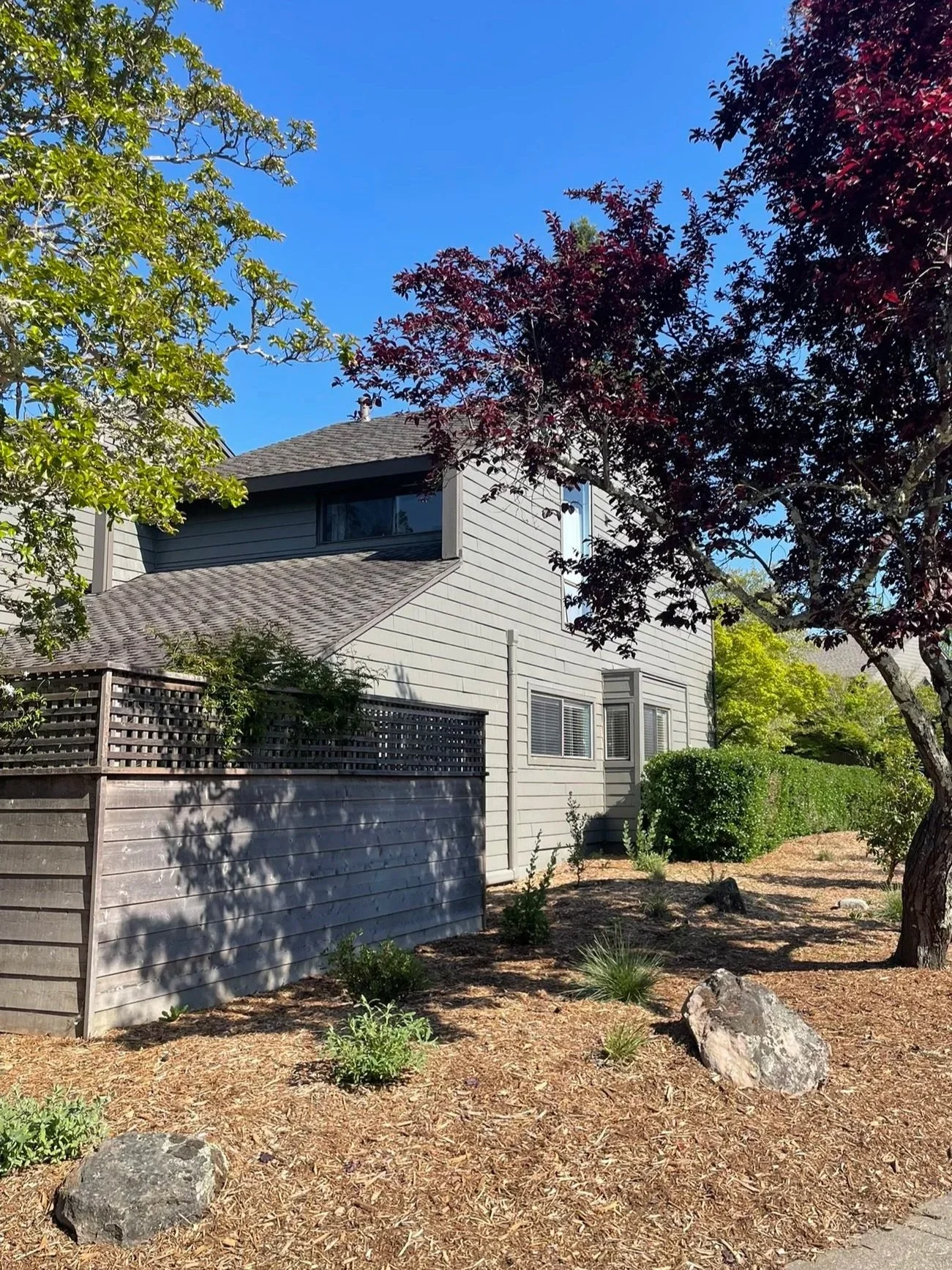
4" and 1gal plants will grow in to large bouquets and disappear the arbor mulch
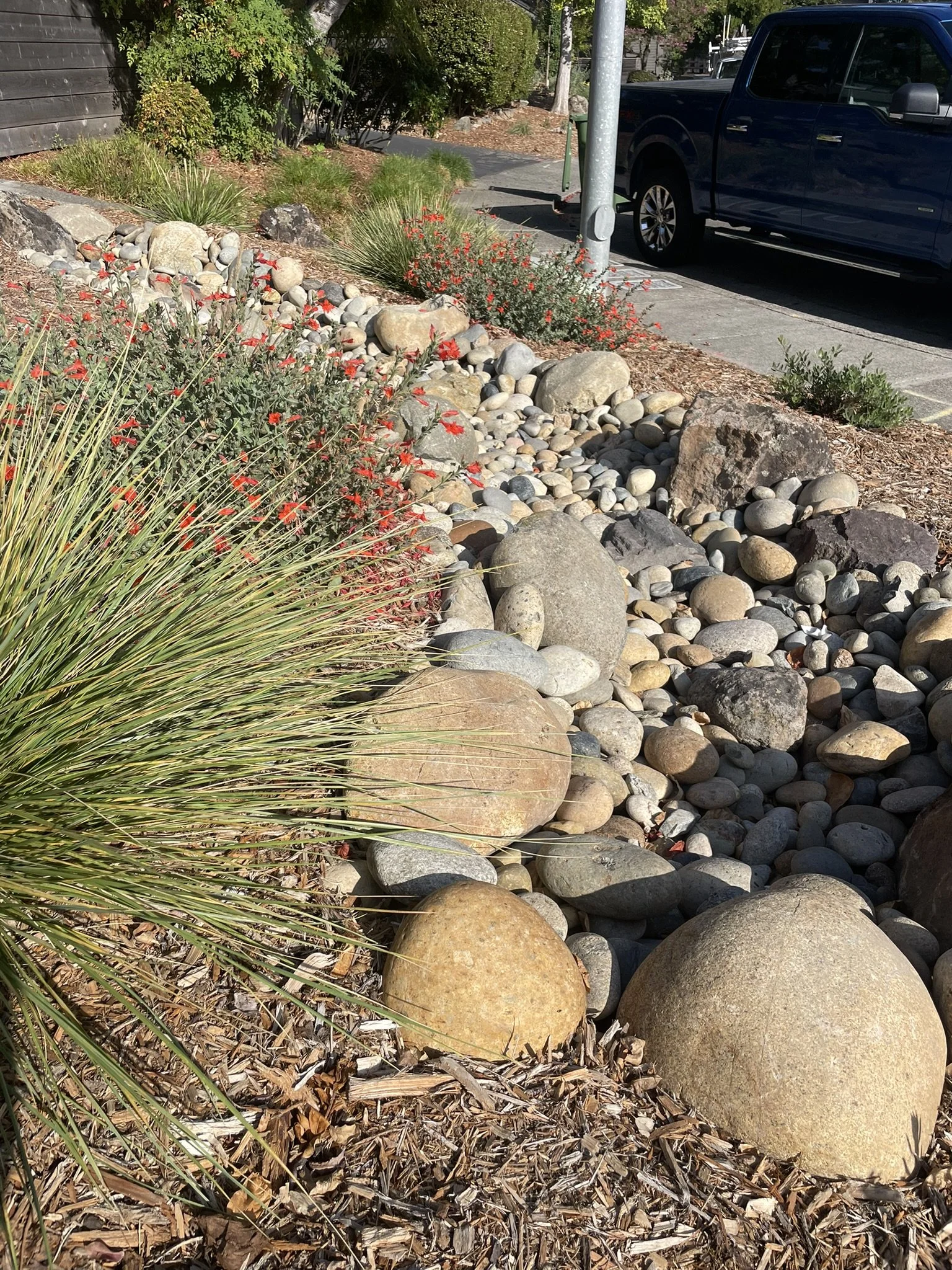
A dry creek bed winds through a sloped planting bed filled with drought tolerant plants, including Epilobium canum (CA Fuchsia)
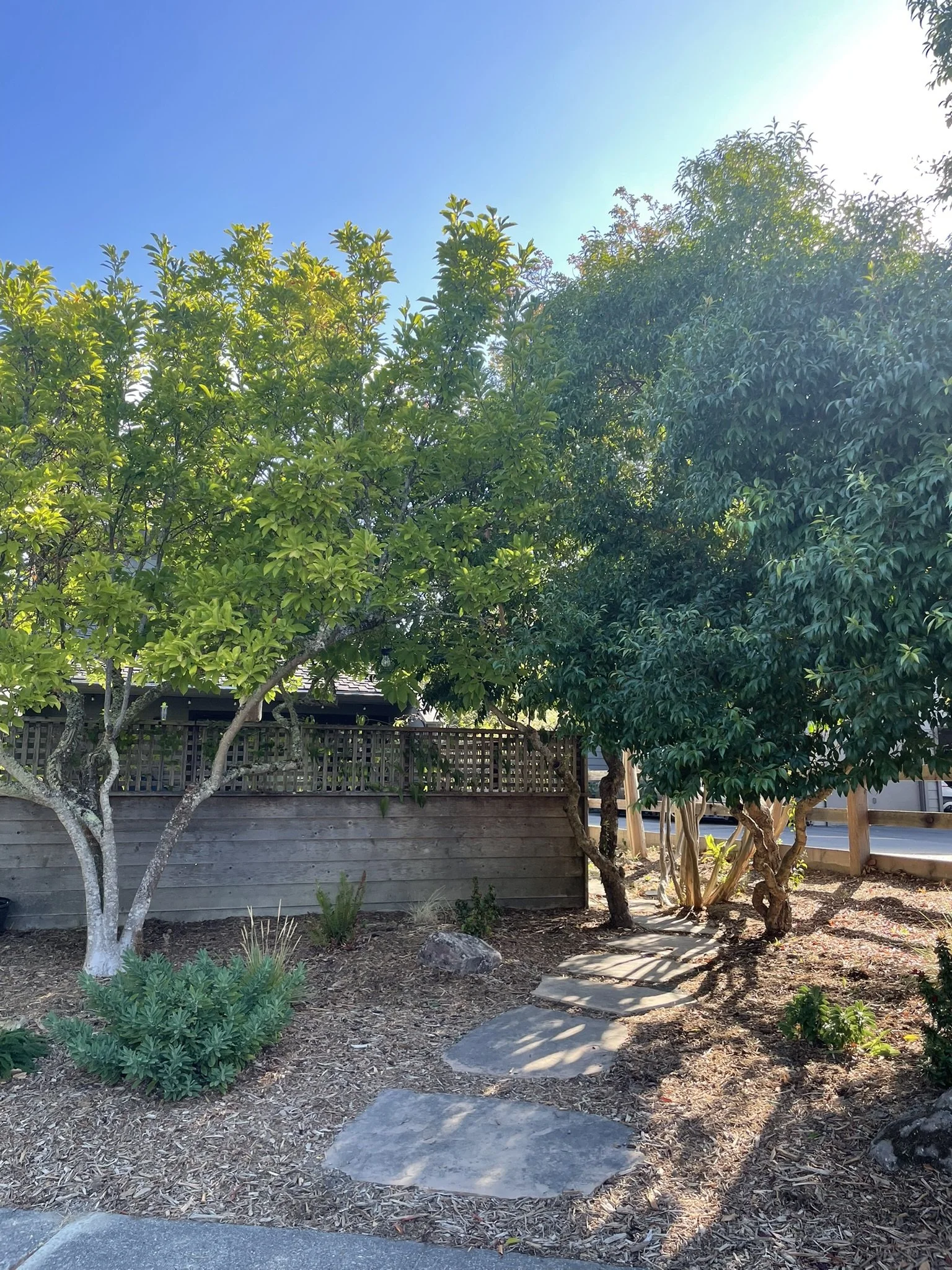
California Fescues and Sticky Monkey Flower soften the dryset flagstone pathway