
Front Yard Rewilding (Lawn Conversion)
Location: Sebastopol, CA in Sonoma County (USDA Zone 9b)
Design Goals:
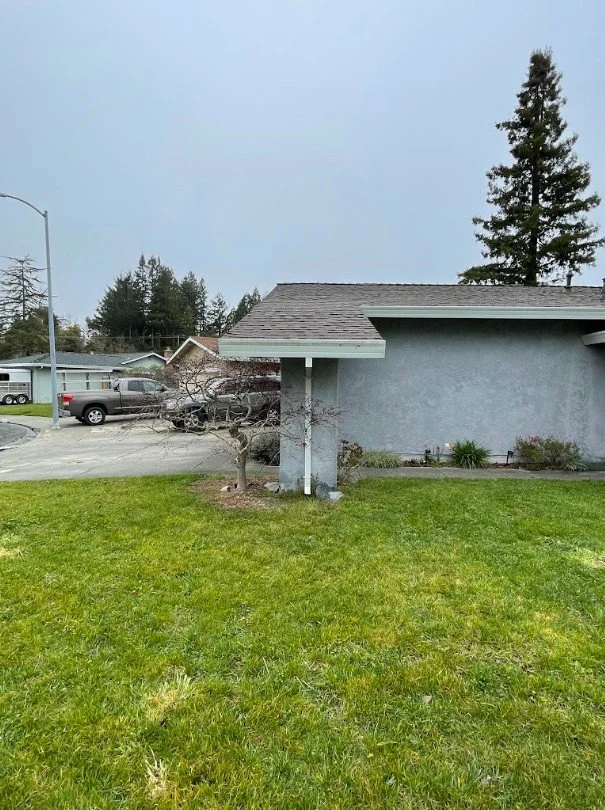
Beautify the front yard of the residence and get rid of the drab lawn
Privacy from neighbors while maintaining sunset views from interior of house
Aesthetic vistas for front rooms inside home
Create calming courtyard space
Integrate native plants to build habitat
Incorporate High Desert vibes with CA chaparral habitat
Dry Creek for rainwater harvesting and conveyance
Watering Hole to create bird sanctuary
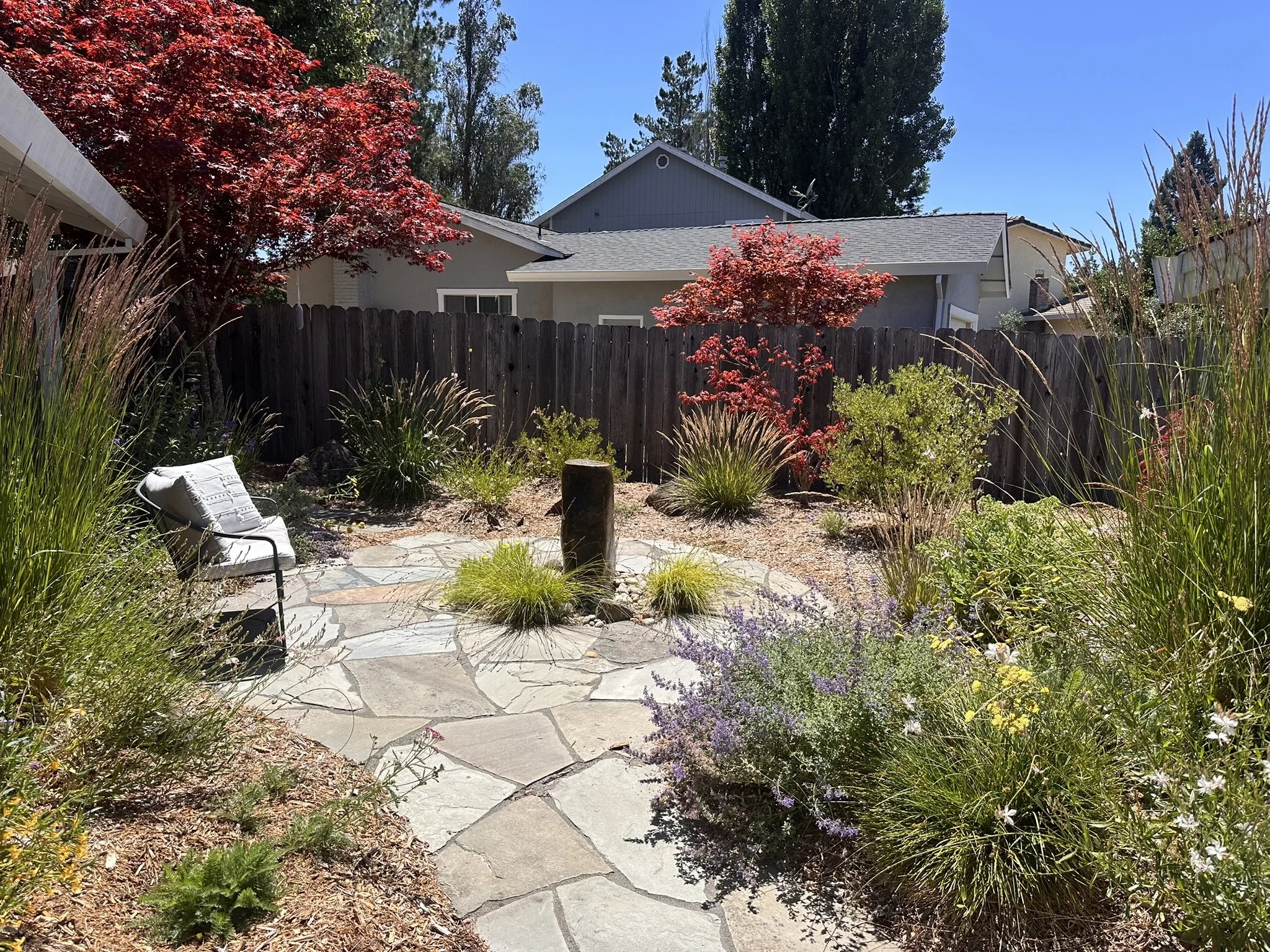
This residential front yard garden is a pollinator oasis of California native plants, a solar powered fountain, and a cozy flagstone seating area to relax and revel in watching the songbirds and bees buzz about. Just a year ago, a thirsty 1000 sq ft lawn with a flat personality was transformed into a welcoming front yard sanctuary filled with color, texture and life. A blend of agaves, grasses, and shrubs create both a stunning streetside garden and a private seating patio, to balance neighborhood curb appeal and resident family privacy.
The garden was created using a variety of ecological methods:
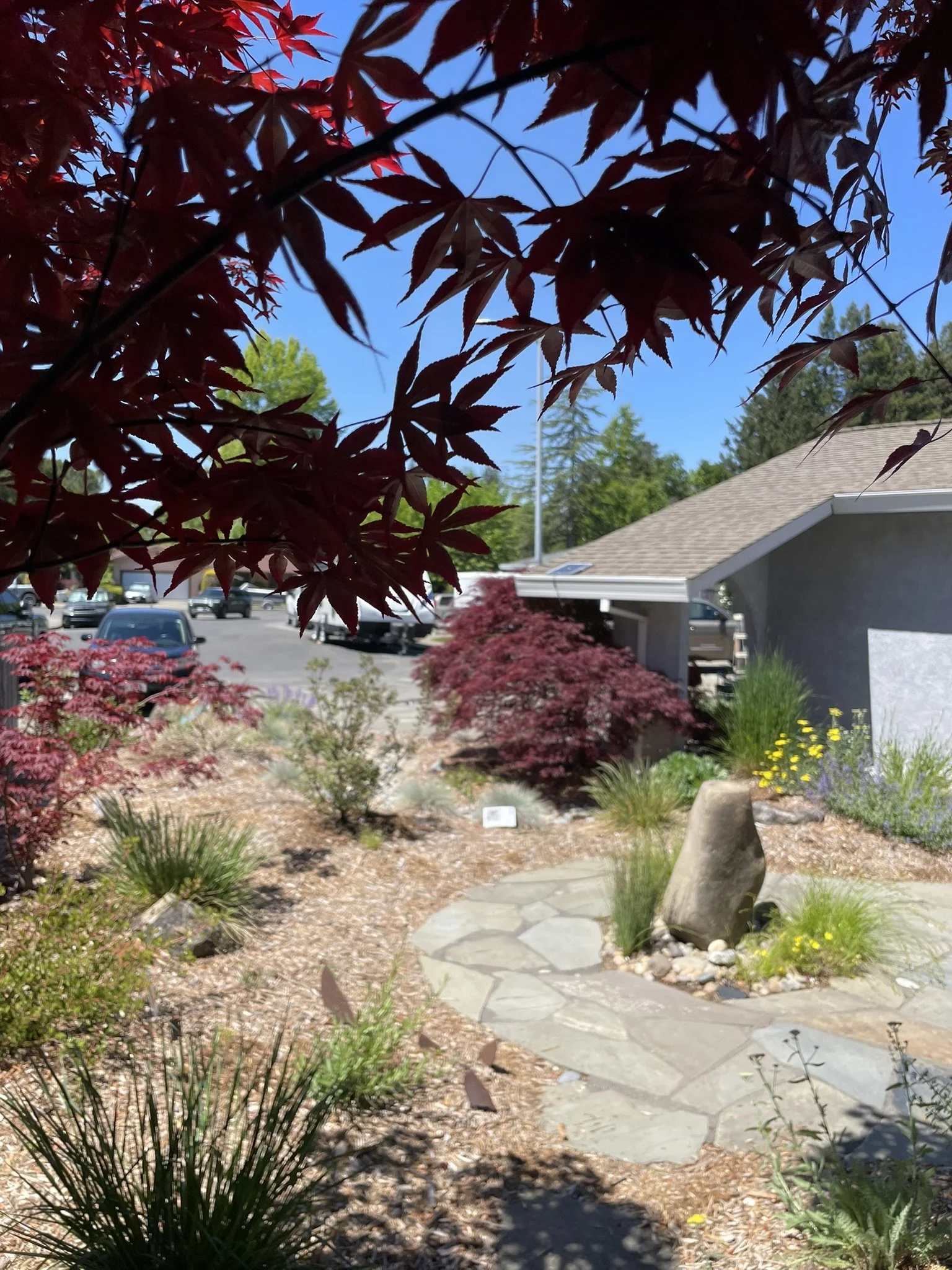
The 1,000 sq ft of lawn was pulled up and used to create dynamic mounds in the landscape. Bonus–this method diverted debris otherwise destined for a landfill and added organic matter to the native soil. The site was then sheetmulched using reclaimed cardboard to suppress weeds and help native plant establishment. A meandering dry creek was created to capture downspout runoff, slow and sink the water on site. It also serves as a year round aesthetic interest, invites wildlife to the area, and offers intrigue to young kids at play.
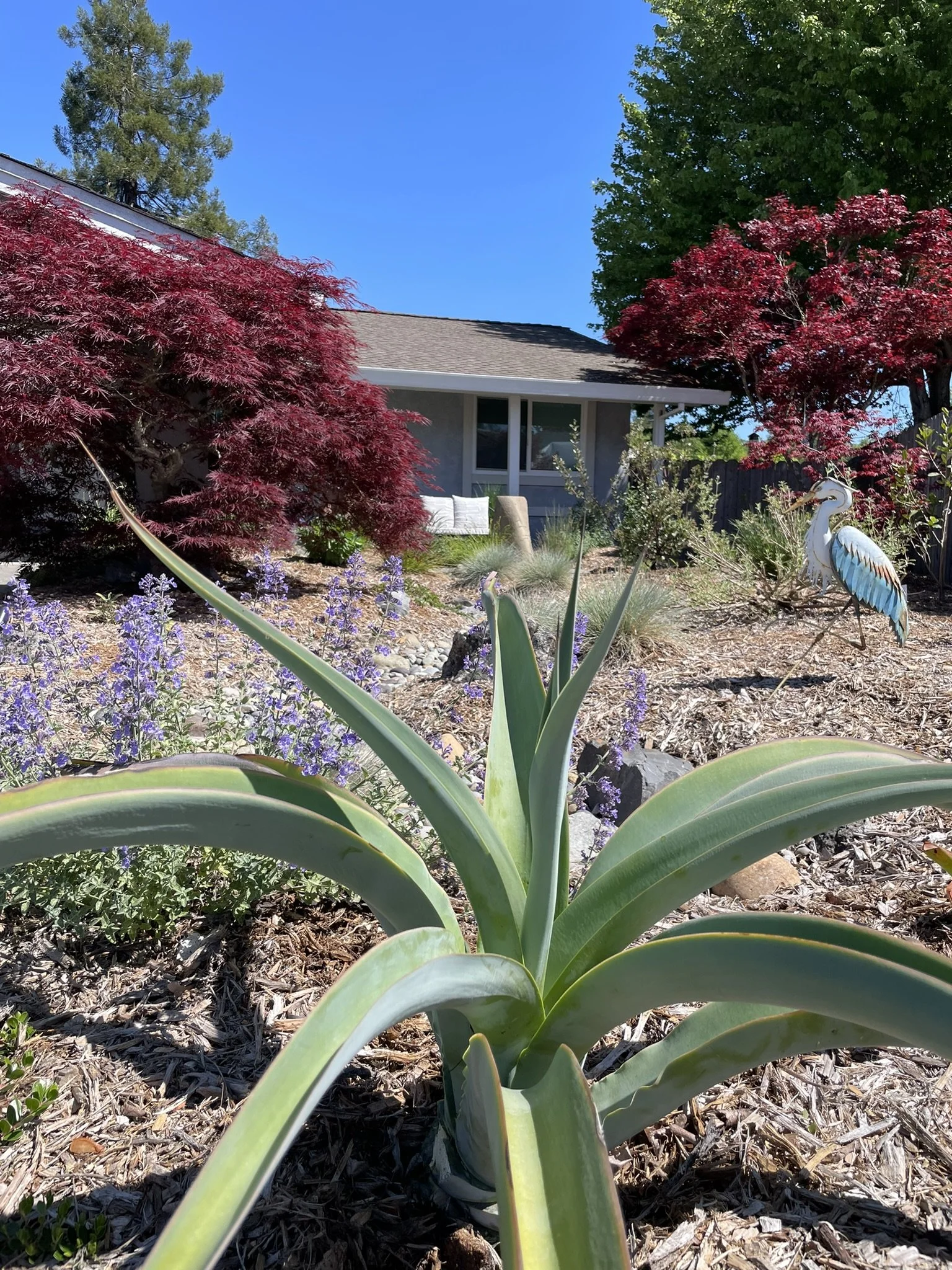
Desert plants like Aloe ‘Striata’ and Agave vilmoriniana in the palette are placed closer to the street for safety, yet draw visitors in with their structural form. Finally, low voltage landscape lighting completes the garden by accenting a few of the shrubs, trees and fountain to create a warm welcoming glow during the evening hours.
This garden, though only a year old in these photos, already feels like it has been a part of the wider Sonoma County landscape for much longer.
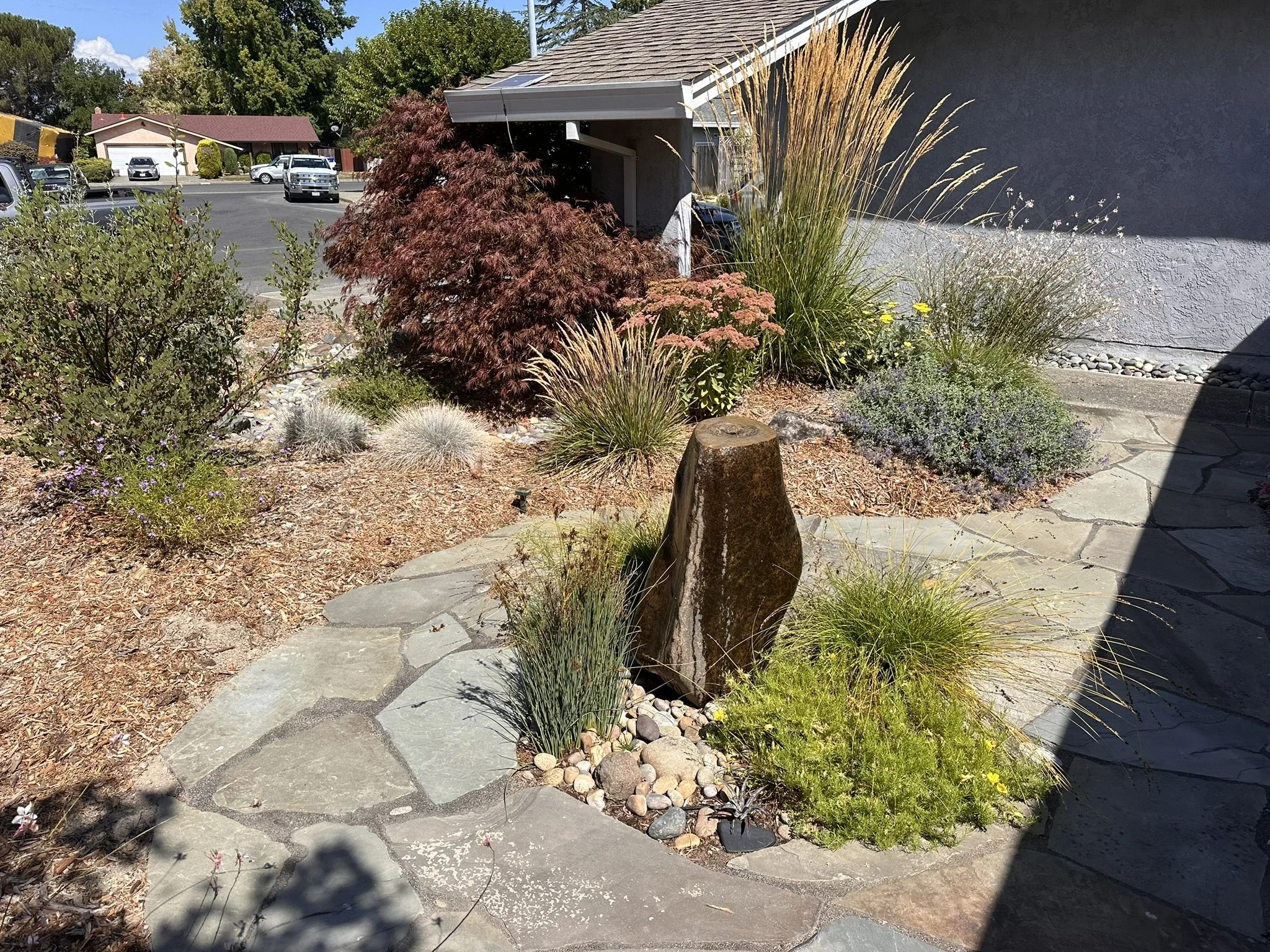
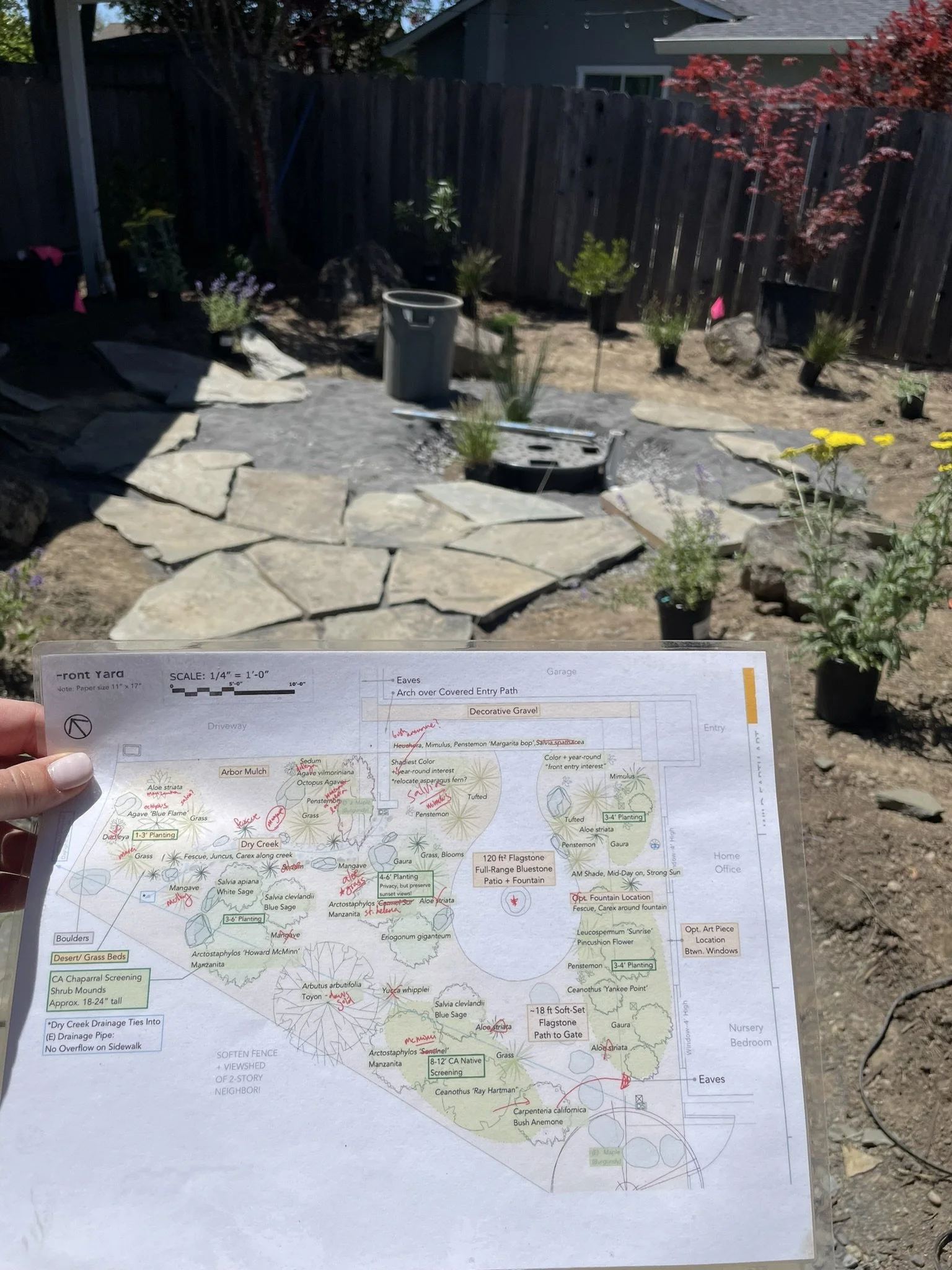
A plethora of drought tolerant CA native plants were planted throughout the garden. Screening shrubs like manzanita, toyon, and sages help to disappear the property fence line and parked cars in the neighborhood, but preserve views of the setting sun from inside the home. A few existing Japanese maples remain in the yard offering soft shade all summer long. Local moss rock boulders punctuate the landscape along with native grasses, ground covers, and perennials, including penstemons, yarrows, sticky monkey flower, and ceanothus.

A sheltered seating area was created for the residents to enjoy the western sunset views, the pollinator fountain, and create a private feel from the street. The flagstone is dry set into gravel (without mortar or concrete) which allows water to permeate into the ground for better drainage and water sequestration. Birds, pollinators, and people alike are drawn to the basalt stone fountain at the center of the patio. The fountain is pondless which avoids any sitting water (a safety hazard), is powered by a solar pump, and the slower trickle is a welcome reprieve for pollinators to enjoy water. It also creates a welcome viewpoint from the office and bedroom windows of the house.
We are grateful for the artistry and expertise from these Sonoma County horticulturalists, craftsmen, and creators that contributed to this west county project:
Project Ecological Benefits:
1,000 sq ft lawn removal: flipped into planting berms
Rain harvesting from roof downspout into dry creek swale
Drought tolerant native + pollinator plants
Water-rise drip irrigation
Solar-powered recirculating boulder fountain
Bird habitat in mid-sized screening shrubs
Sheet mulching with cardboard + arbor mulch to feed soil
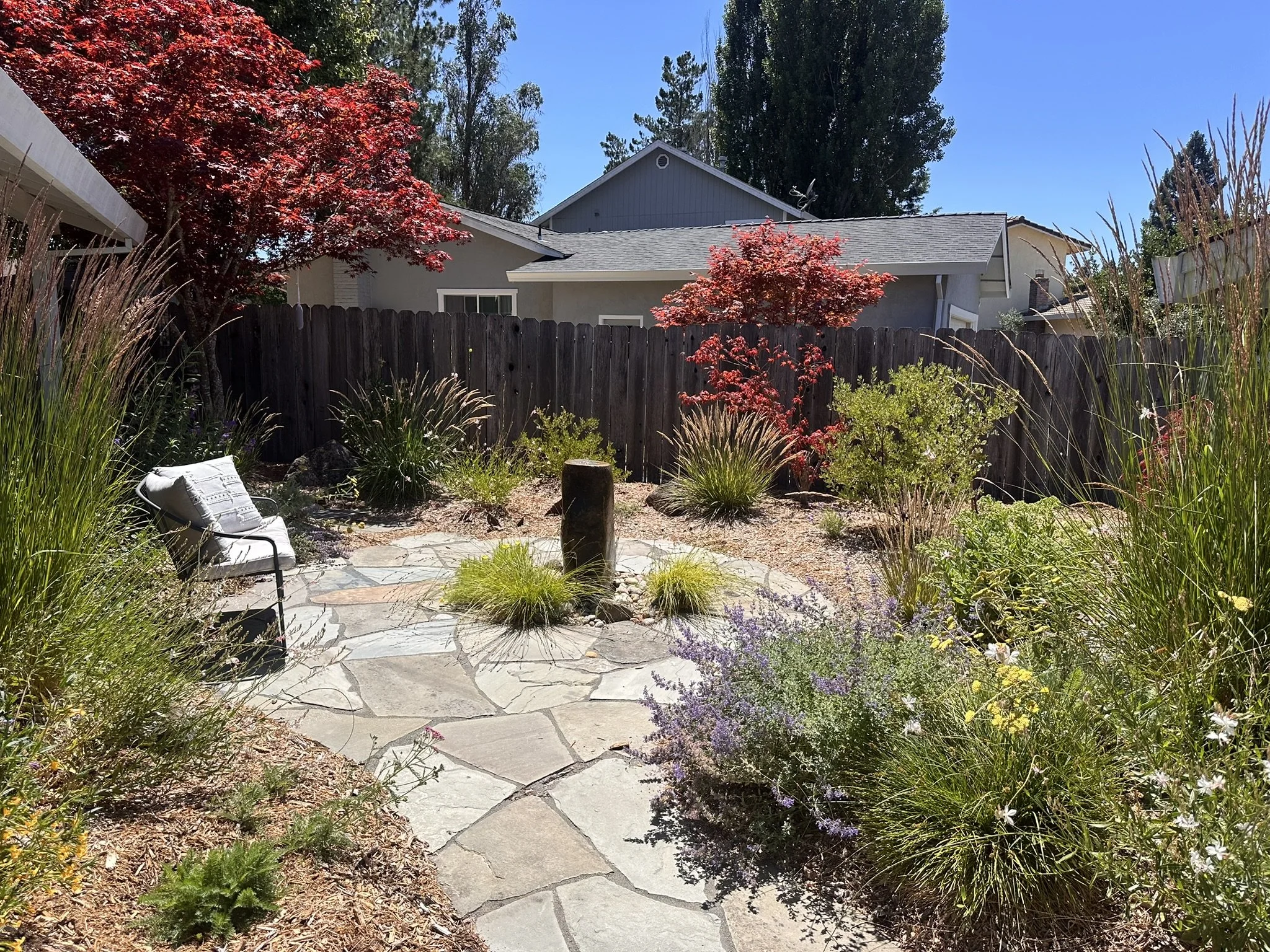
New front garden hitting it's stride in May with many pollinator plants beginning to bloom
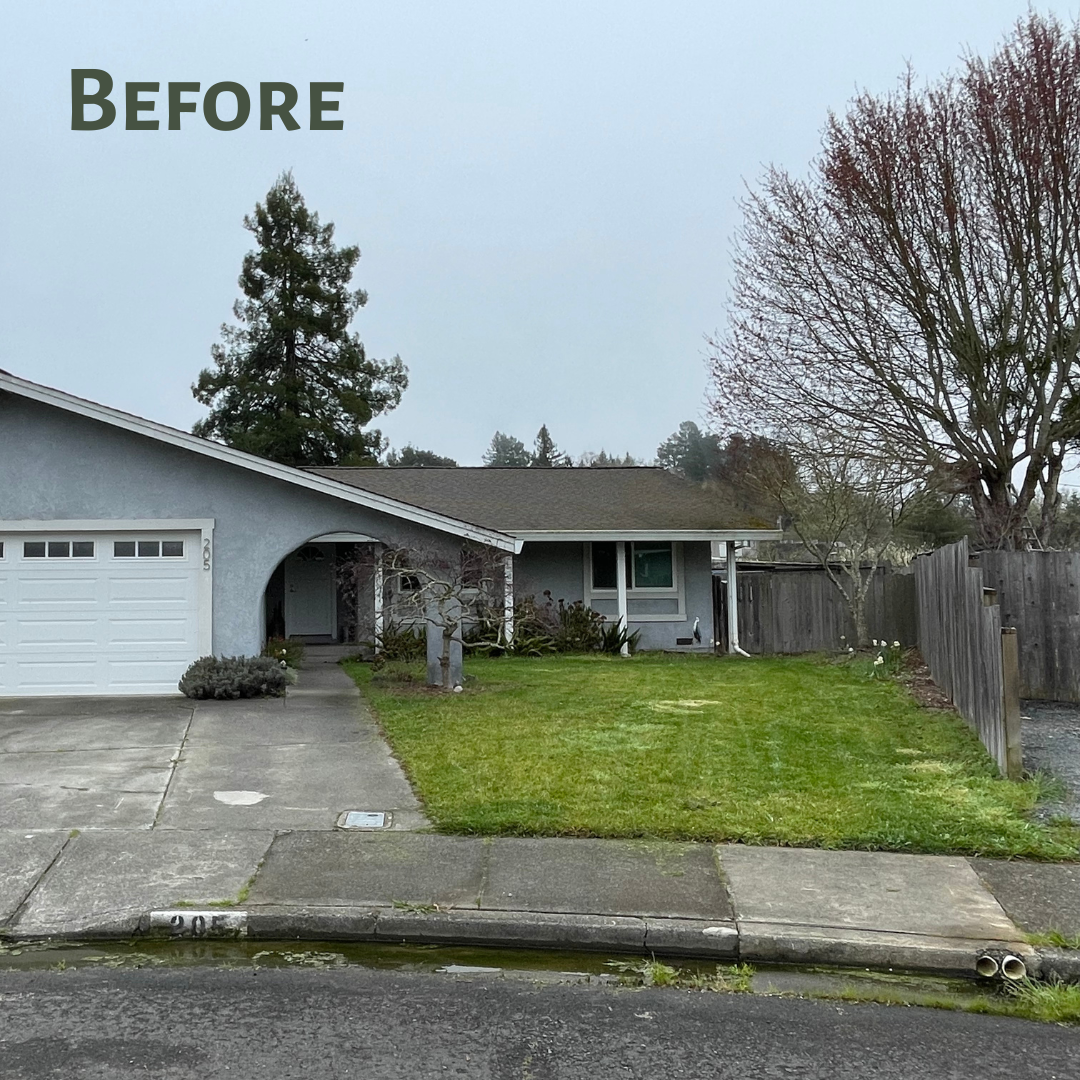
Before photo showing the under-utilized front lawn with no personality
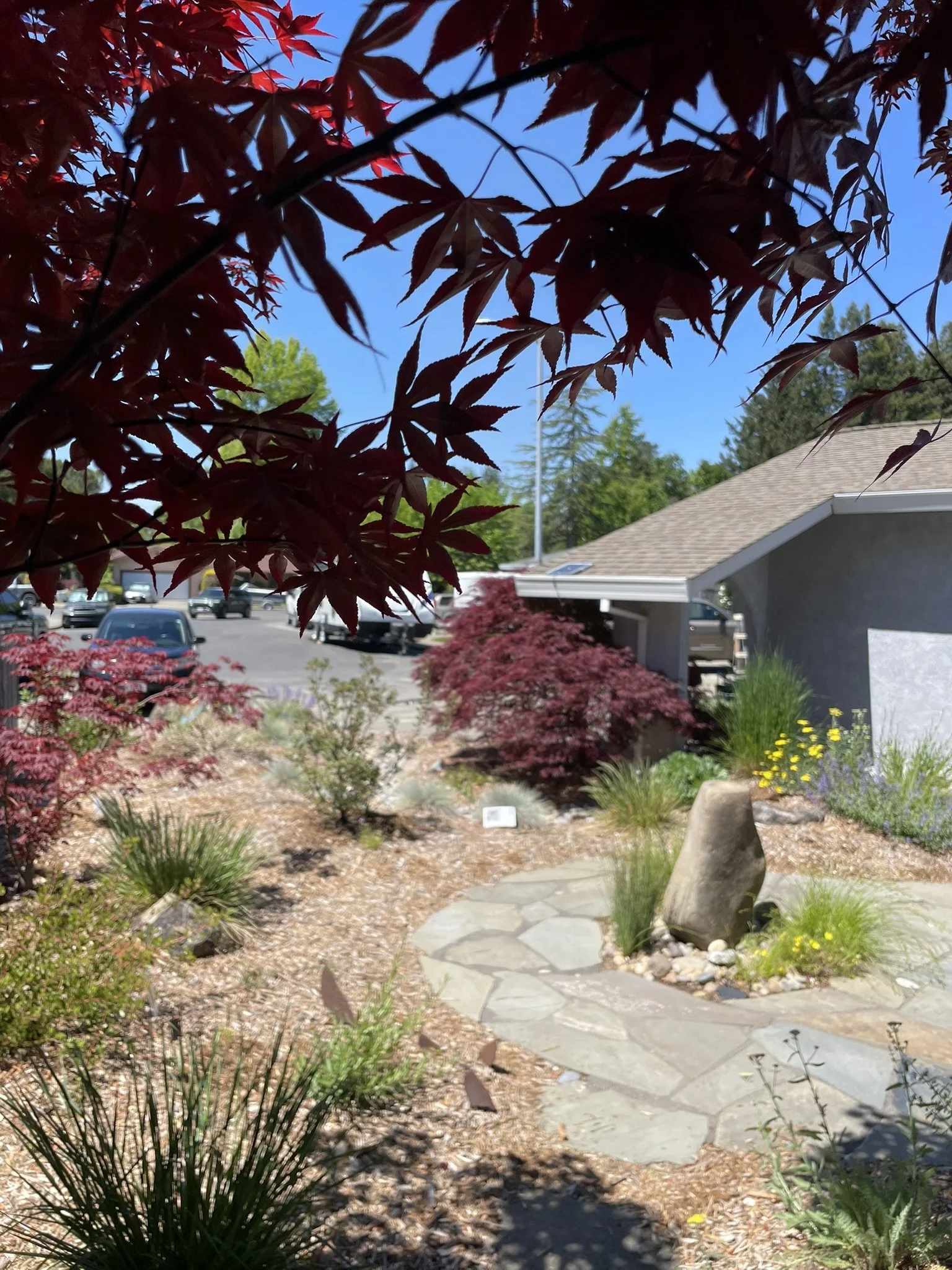
A shady corner view of the front yard facing toward the residential Sebastopol neighborhood.
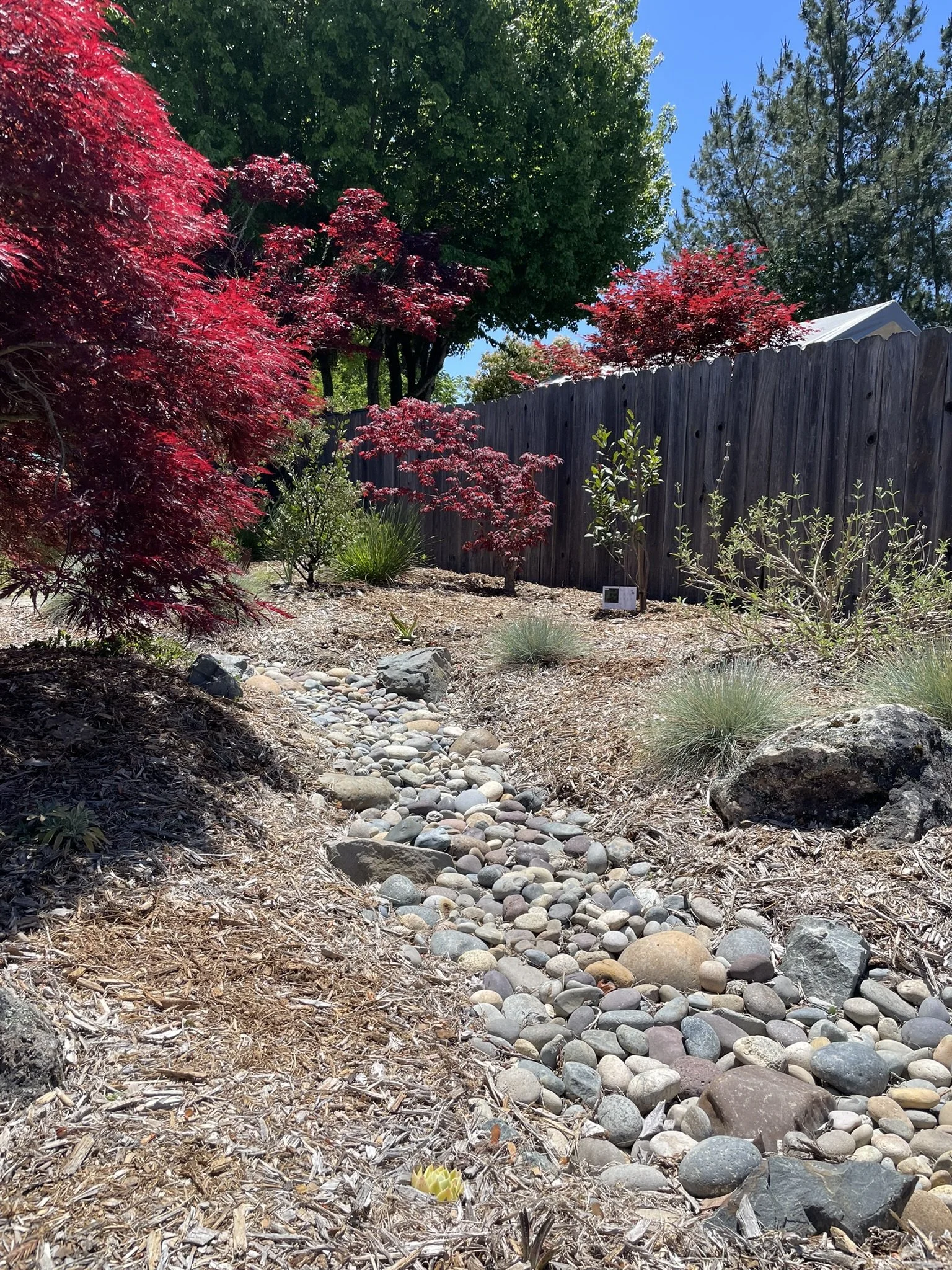
A seasonal dry creek winds through the landscape, slowing and sinking stormwater runoff from a downspout behind the Japanese MAple
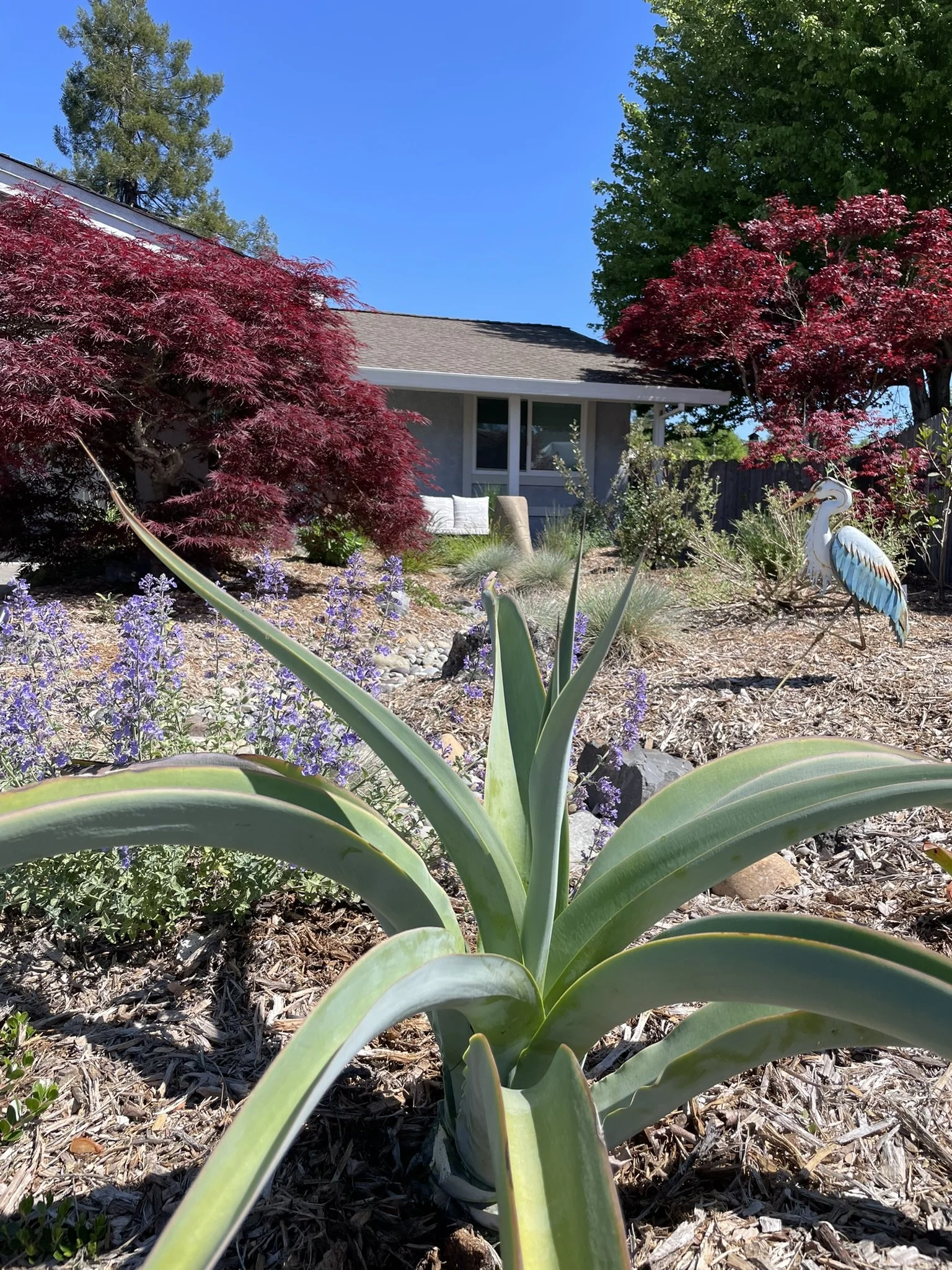
High desert vibes close to the sidewalk using aloes and agaves
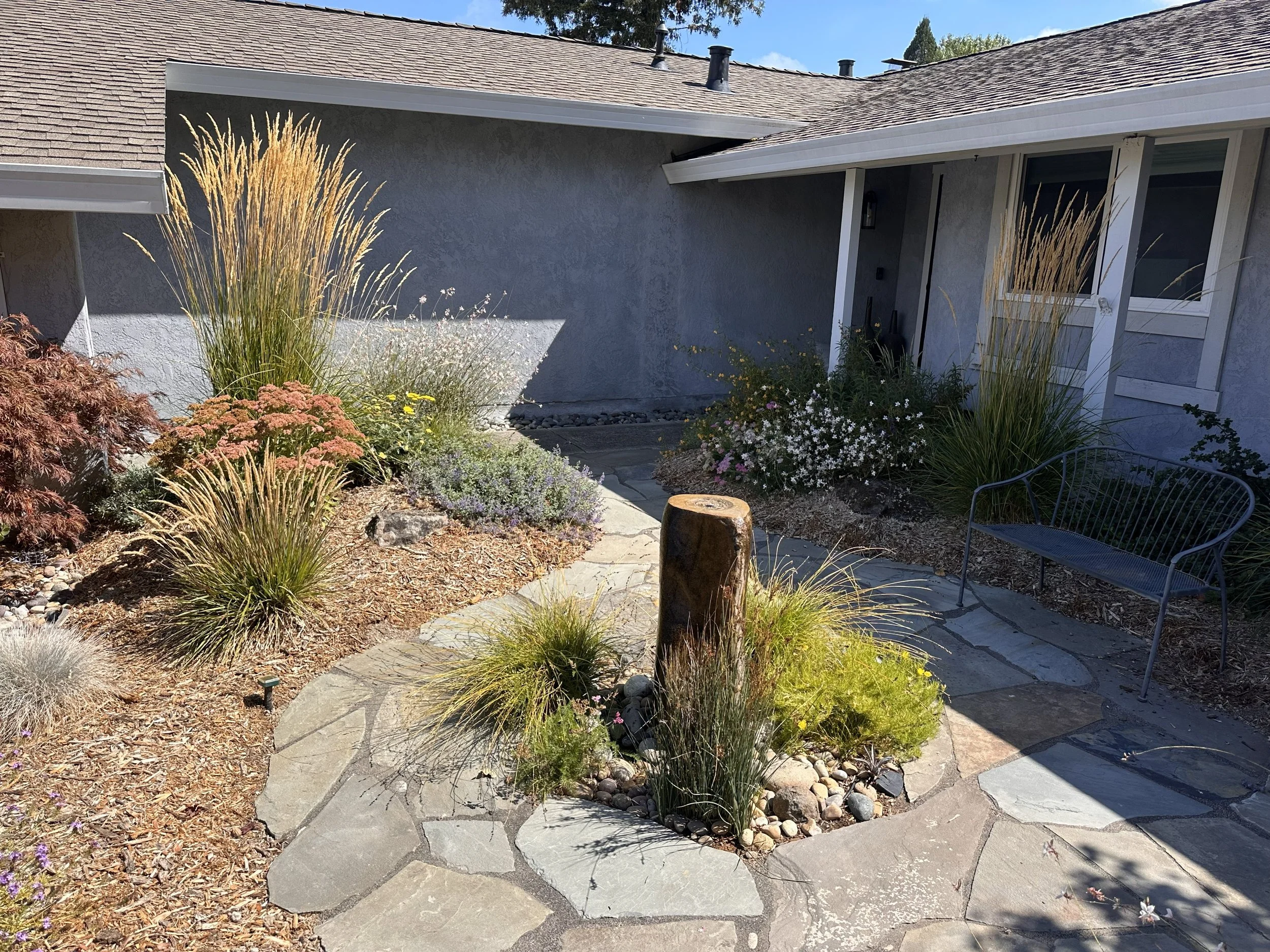
Dryset flagstone patio surrounding a recirculating boulder fountain. Excavated soil from the patio is used to create planting berms
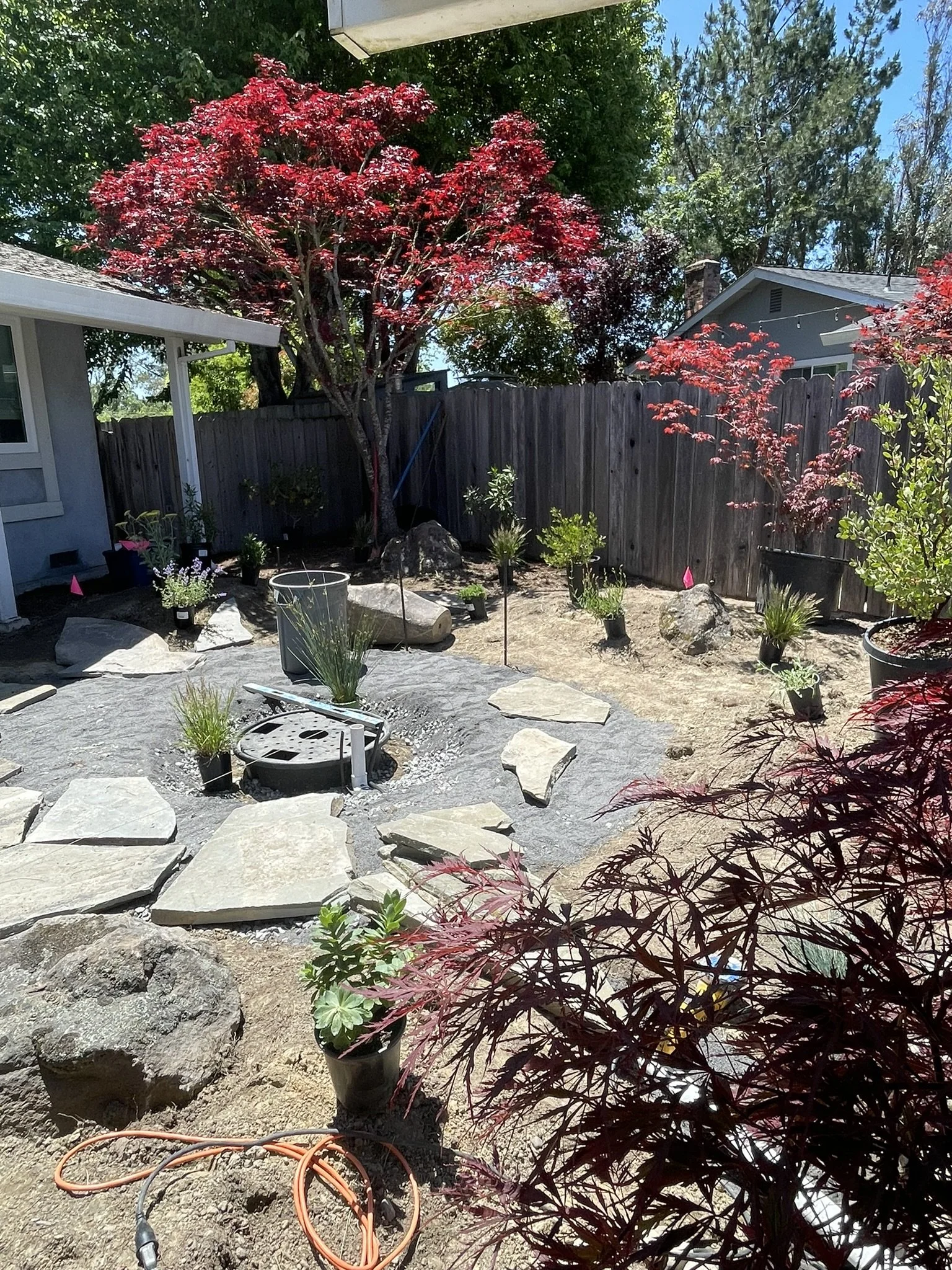
In progress photo showing the patio construction in progress
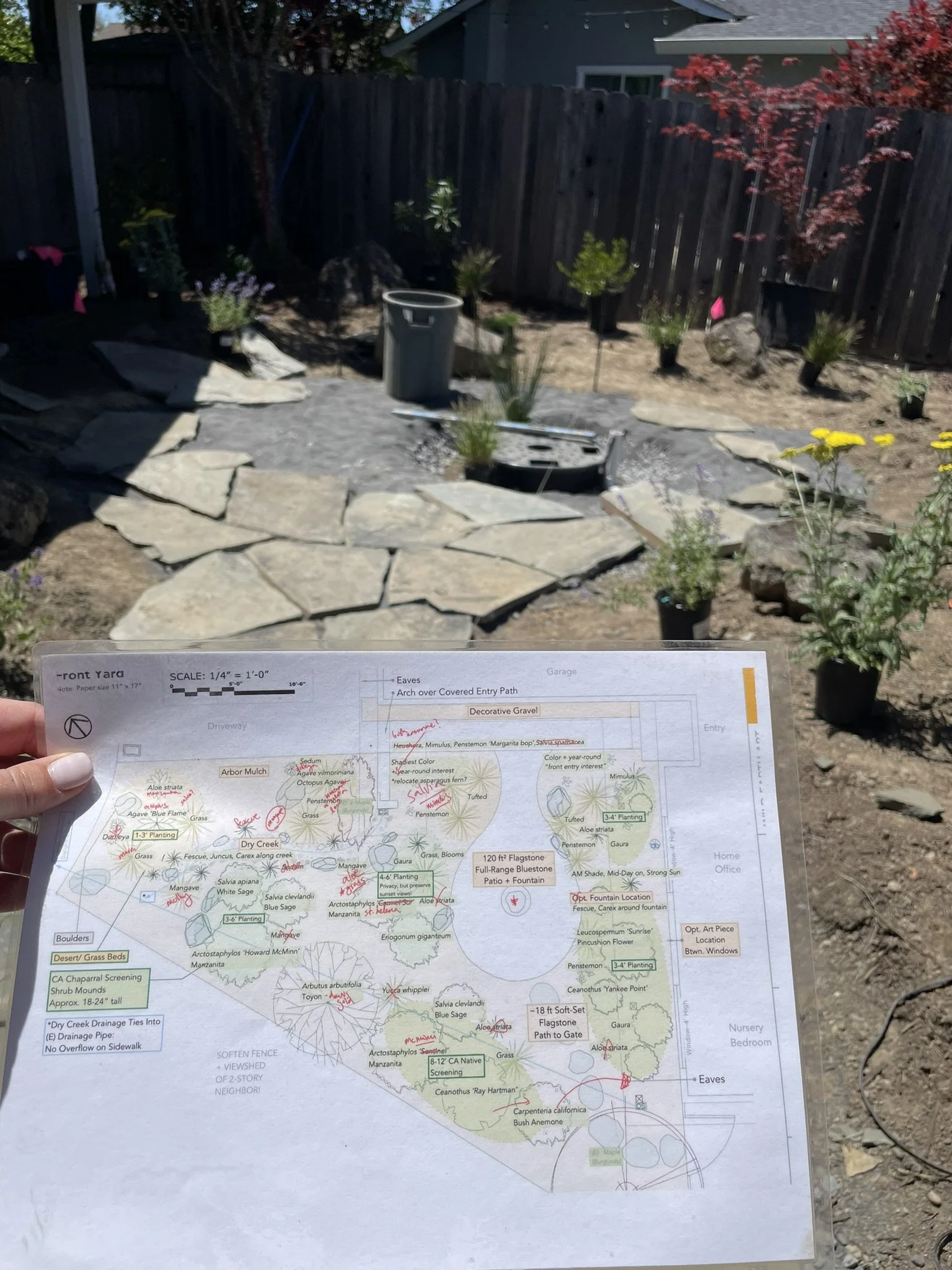
In progress shot during installation showing the printed planting plan in foreground with the boulder fountain feature and flagstone patio in the background
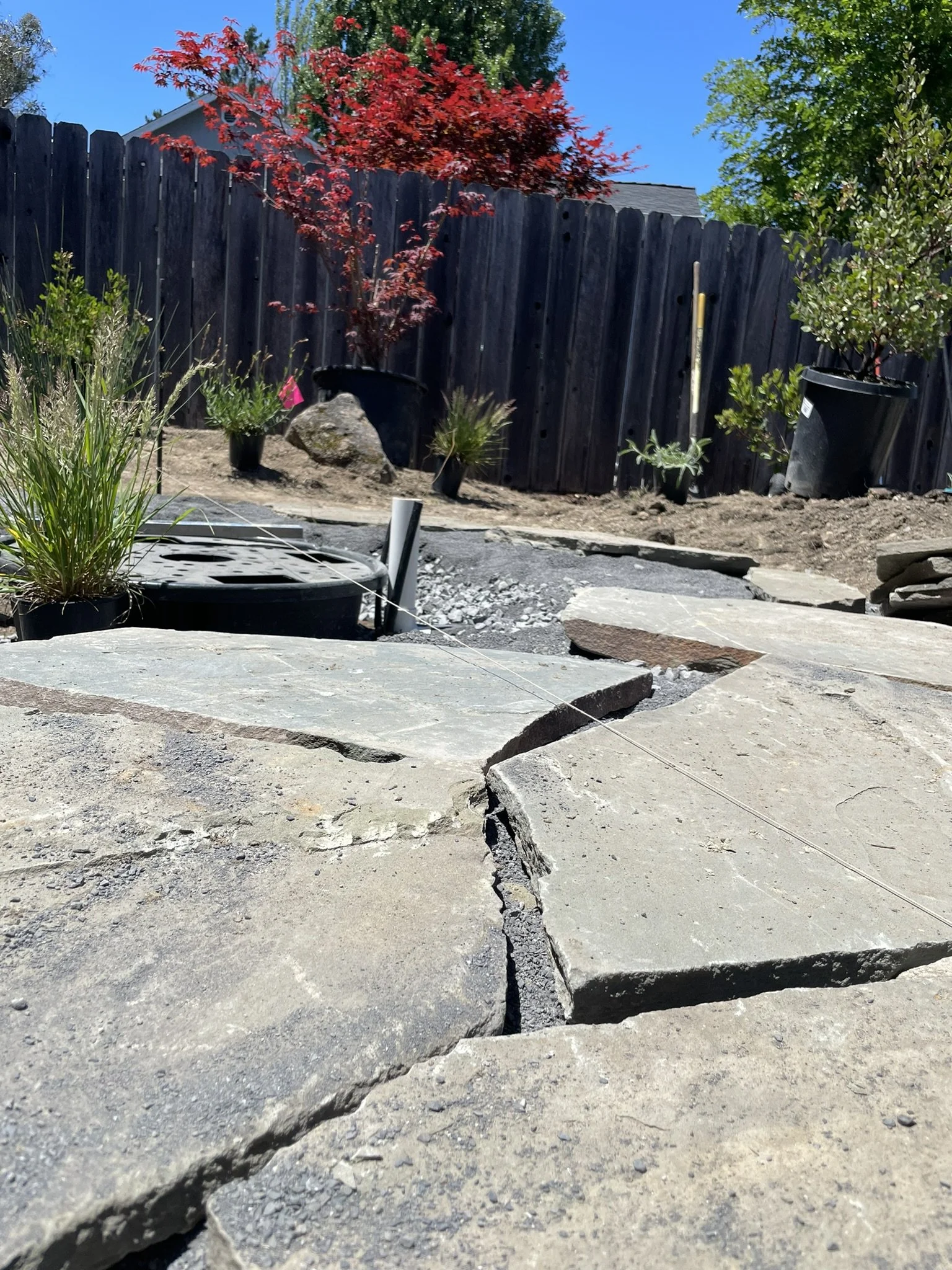
In progress photo of the flagstone patio and recirculating boulder fountain feature being installed
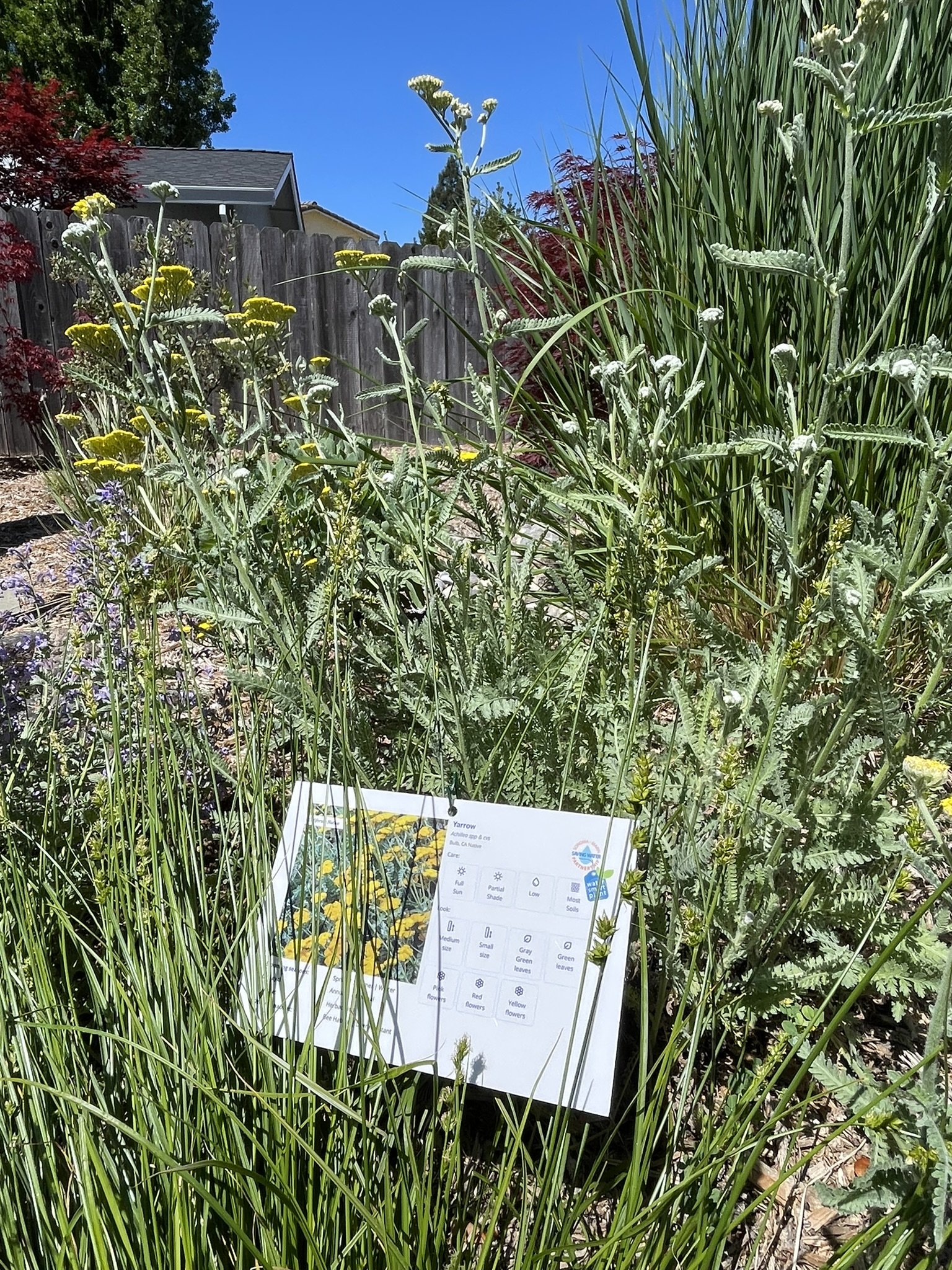
Plant label describing Achillea (Yarrow) as a drought-tolerant species for Sonoma County gardens. Label from the Eco-Friendly Garden Tour put on my the Sonoma Marin Water Saving Partnership
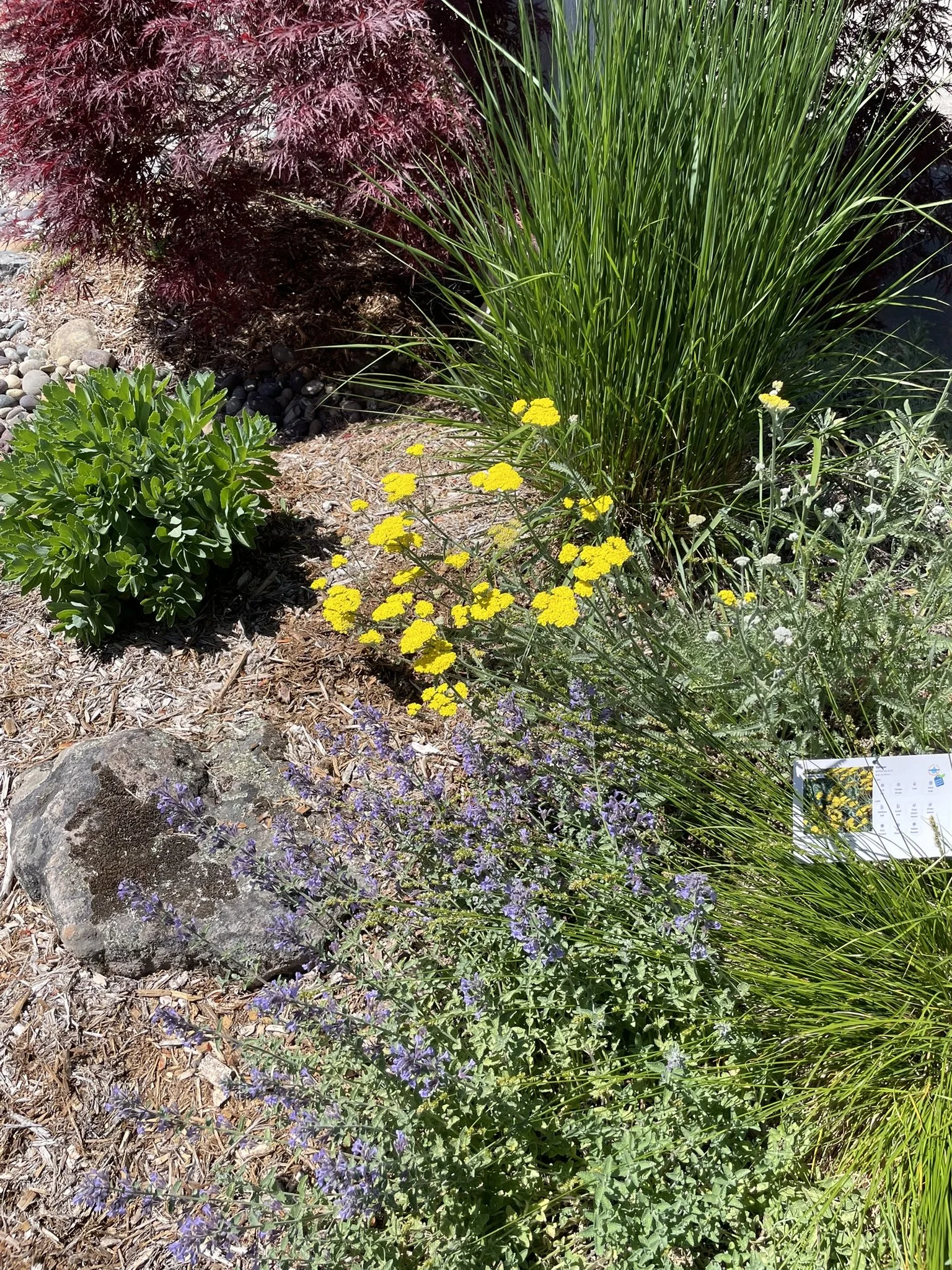
Catmint, Yarrow, Lavenders, Sedum, and other drought-tolerant plants clustered at the home's front entry
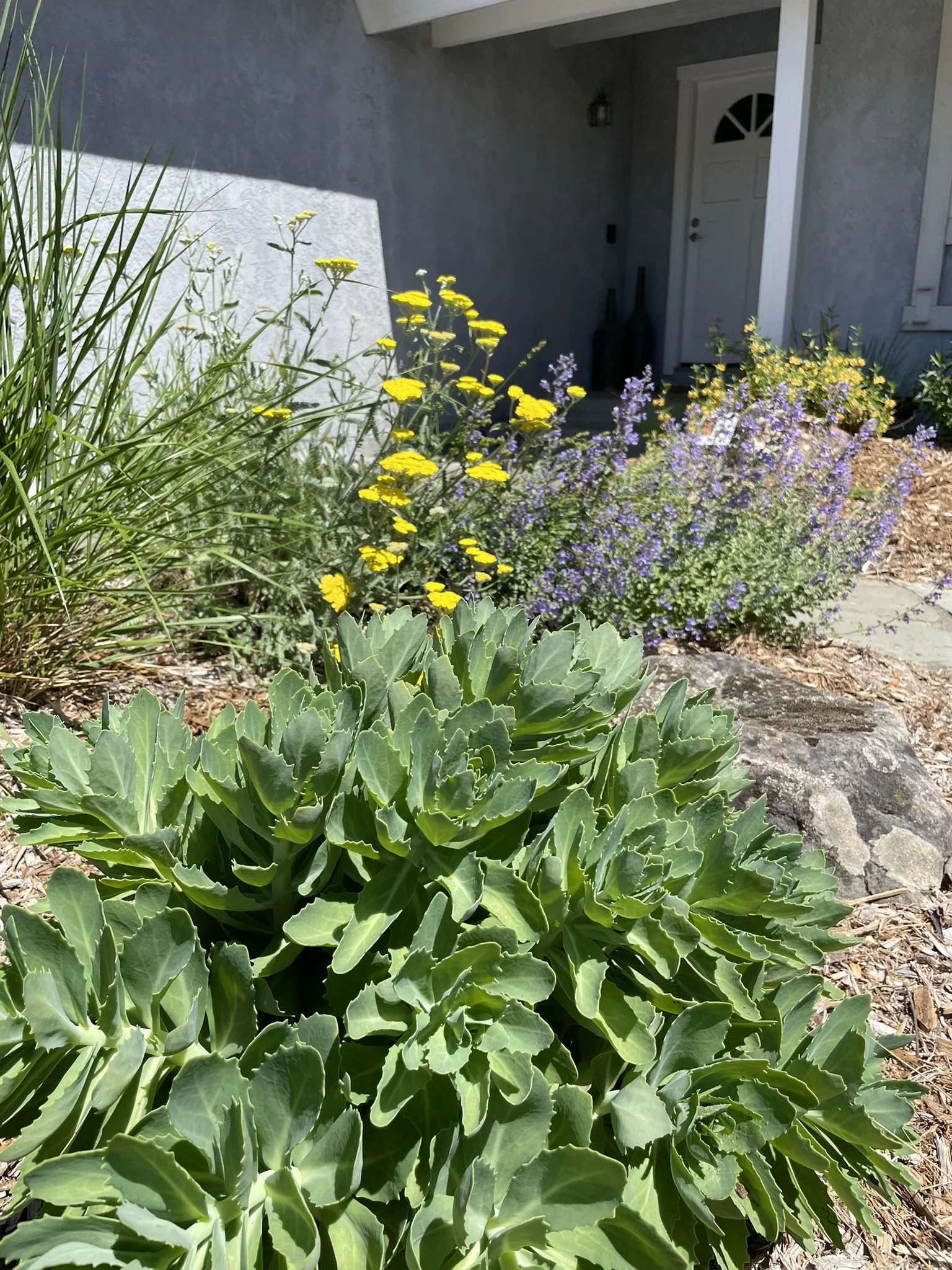
Sedum 'Autumn Joy' brings a medium-coarse texture to the palette (photo taken in May).
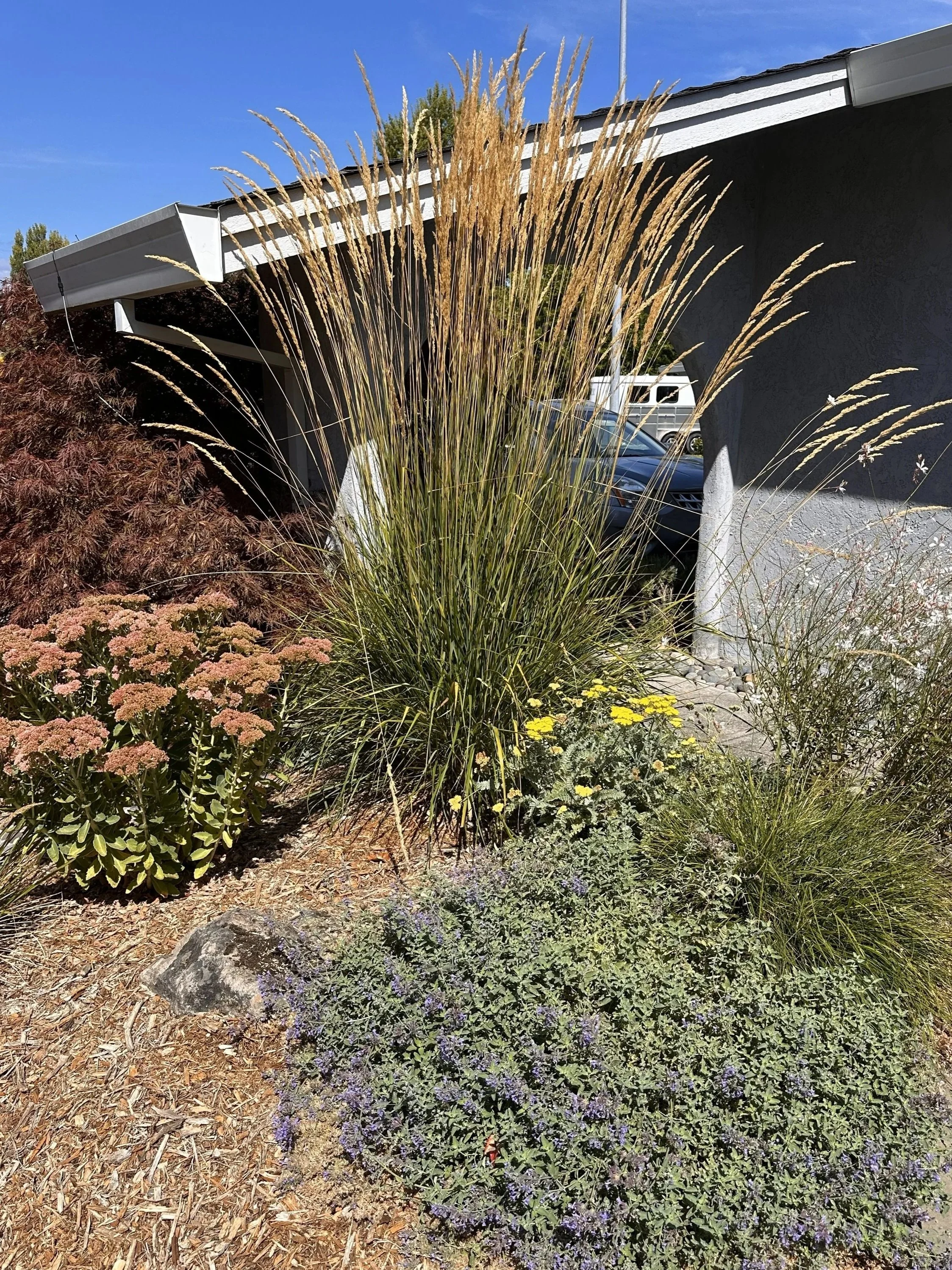
This 'Karl Foerster' grass blocks the driveway from view while colorful perennials like Nepeta, Sedum 'Autumn Joy', and Achillea 'Moonshine' bring layers of color
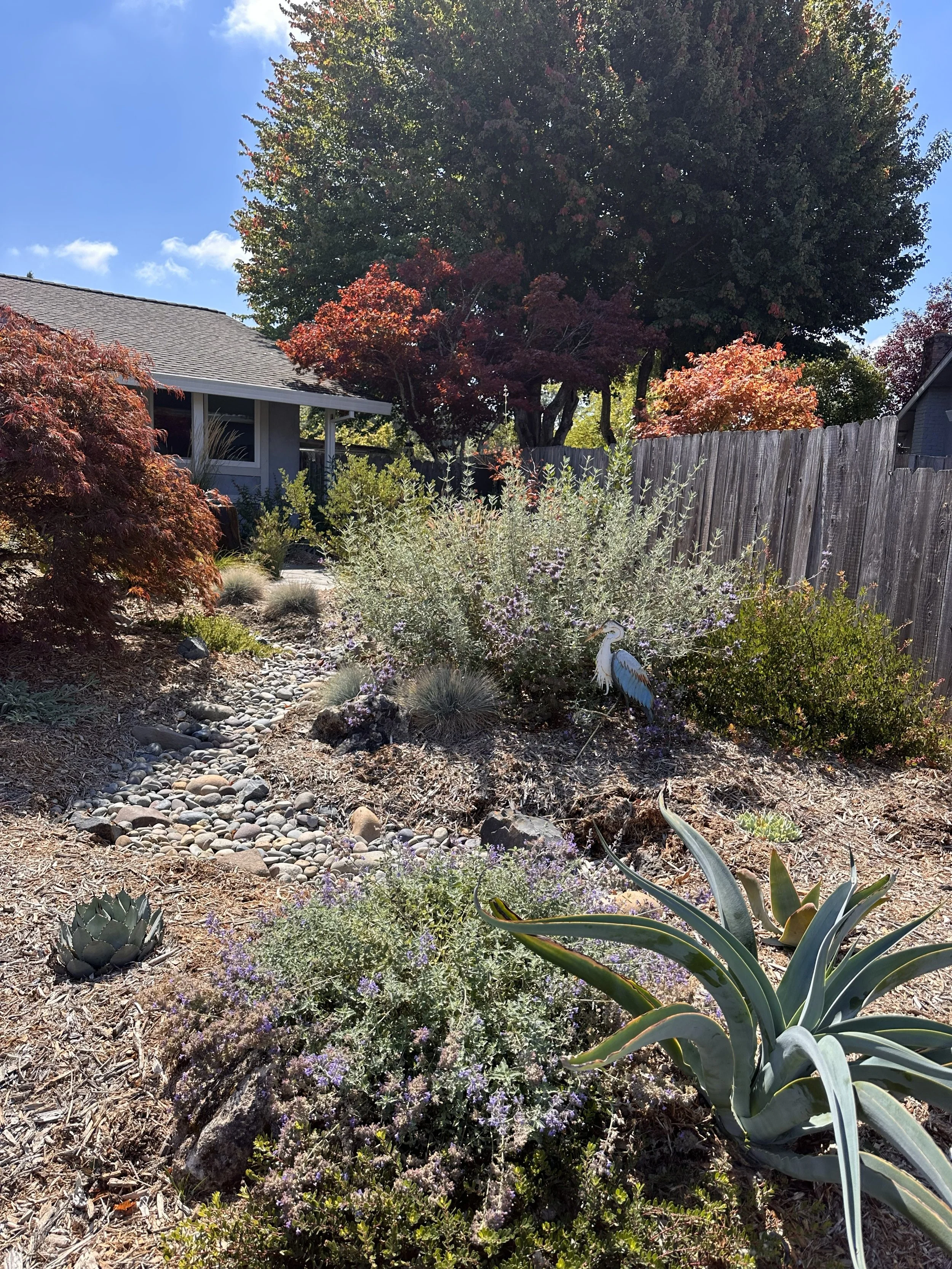
Salvia 'Pozo Blue' grows big in just one year